Joint Nelson
Tasman Regional Transport Committee Agenda – 29 April 2024
7 Reports
7.1
Draft 2024 Speed
Management Plan Hearing Report
|
Report
To:
|
Joint
Nelson Tasman Regional Transport Committee
|
|
Meeting
Date:
|
29
April 2024
|
|
Report
Author:
|
Jane
Murray, Transportation Planning Advisor
|
|
Report
Authorisers:
|
Dwayne
Fletcher, Strategic Policy Manager
|
|
Report
Number:
|
RNTRTC24-04-2
|
1.1 The purpose
of this report is to provide the Joint Nelson Tasman Regional Transport Committee
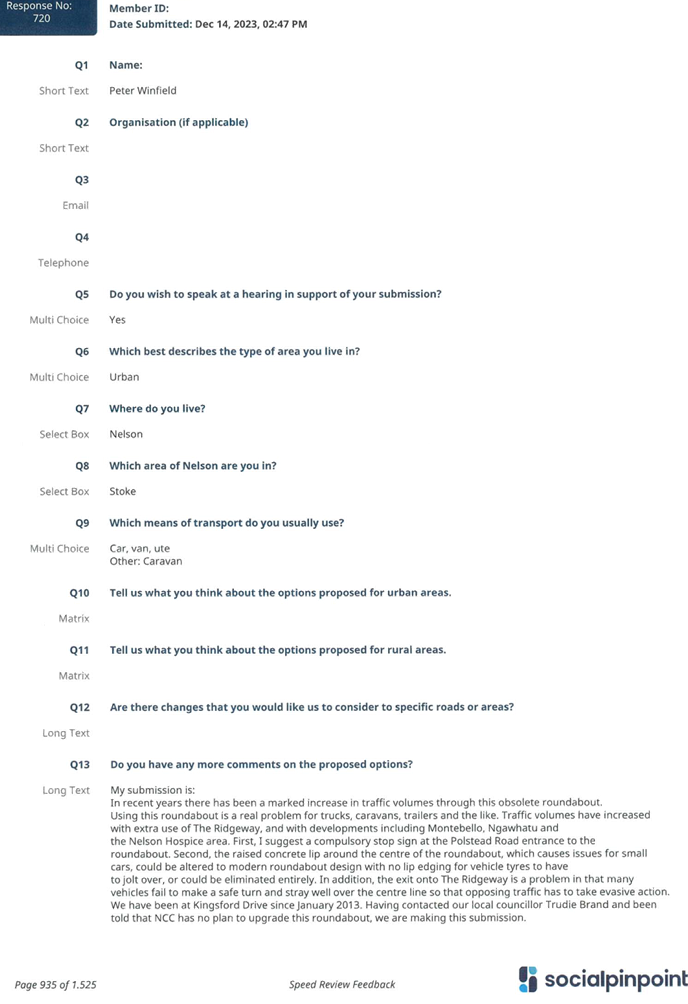
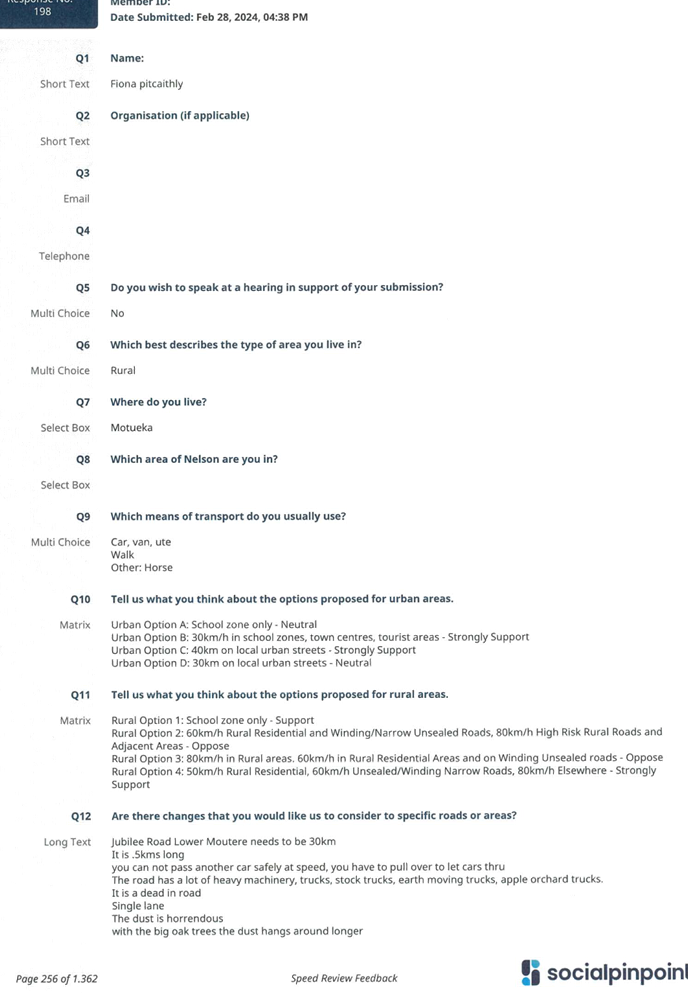
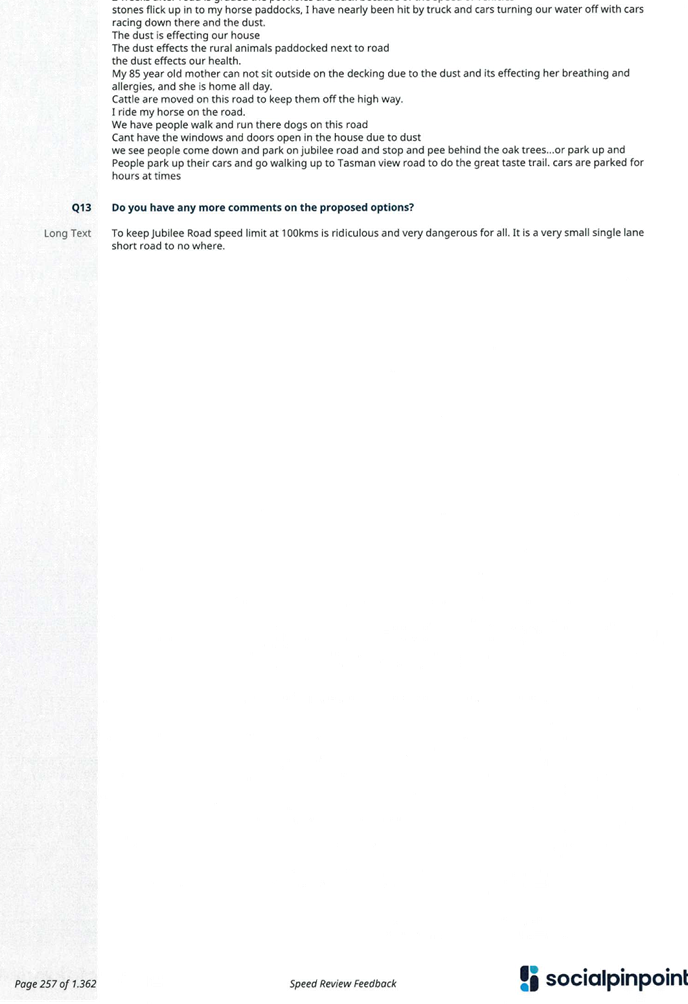
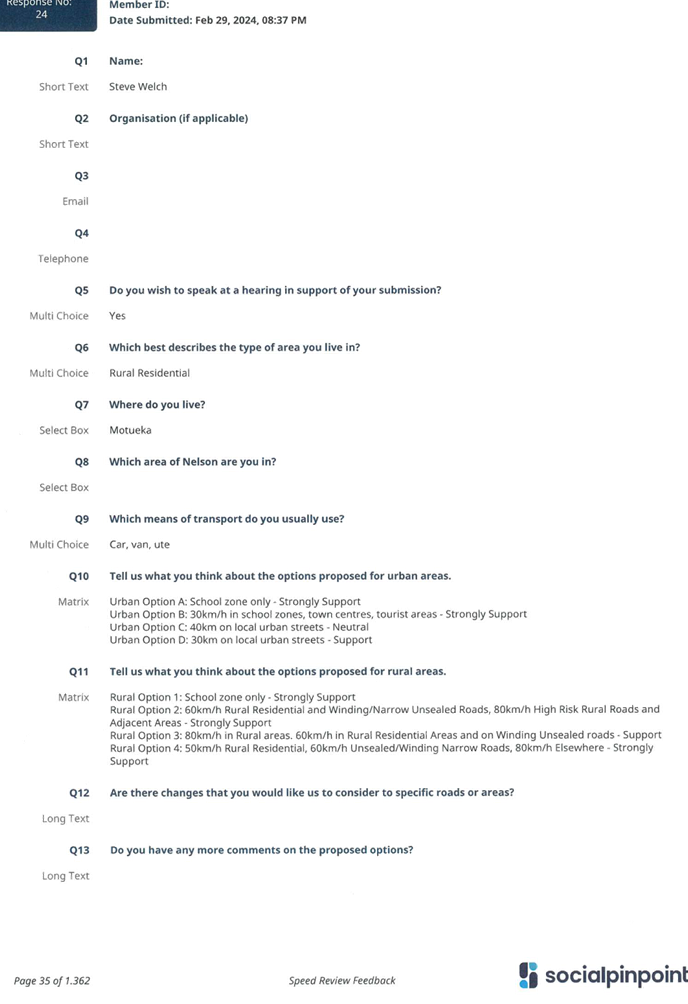
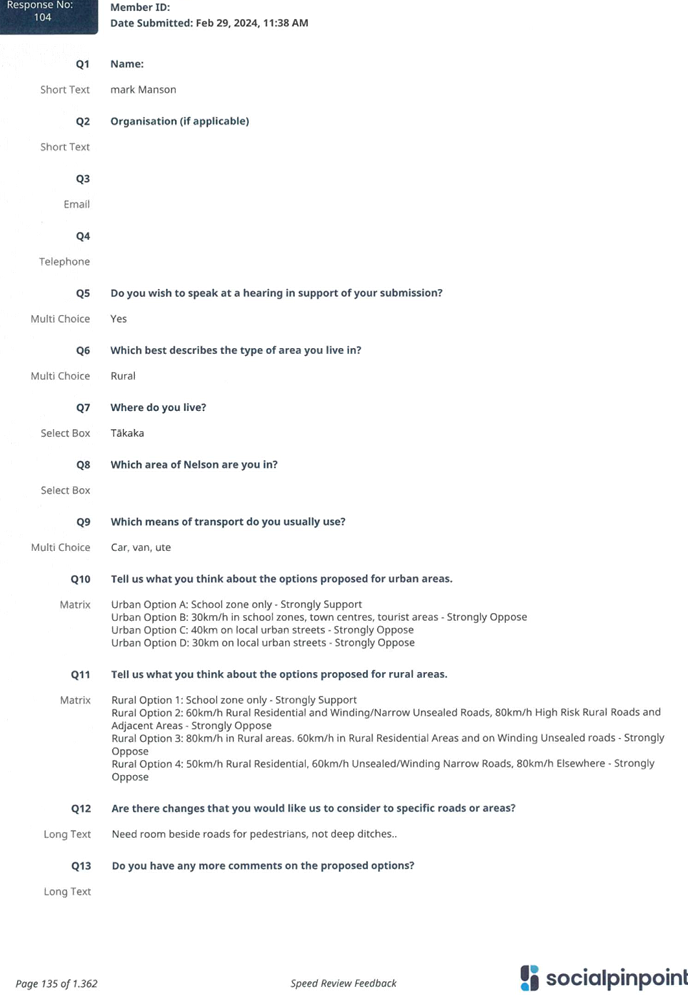
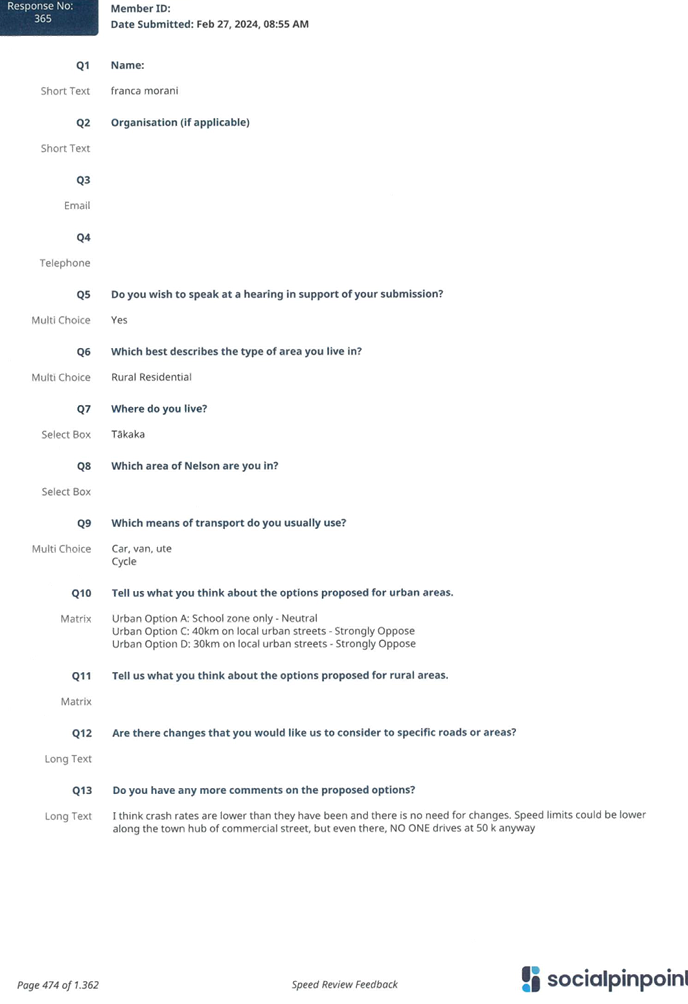
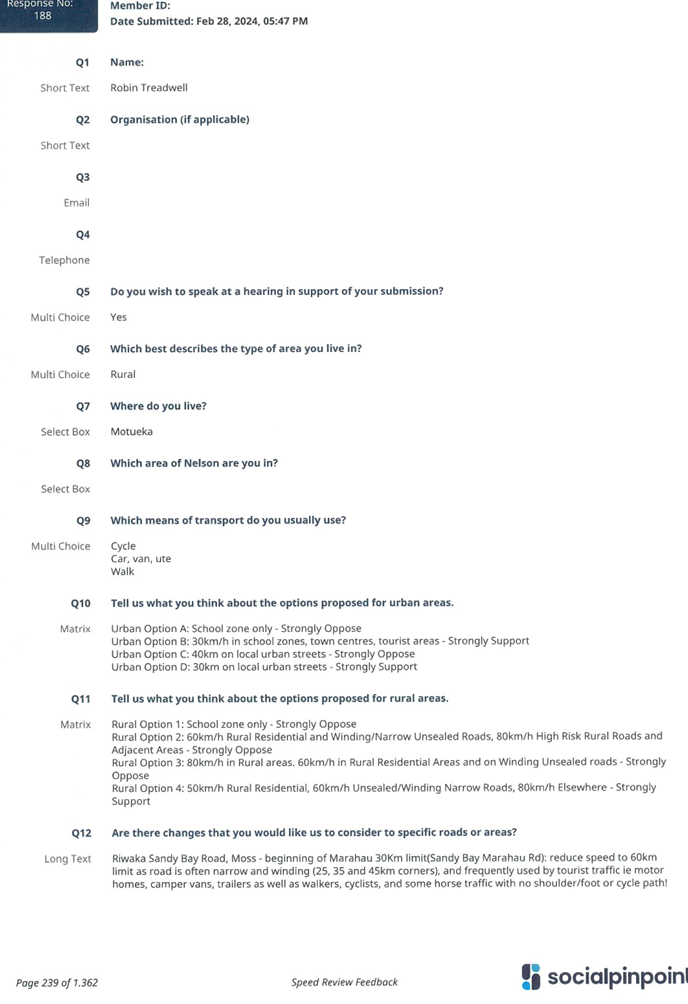
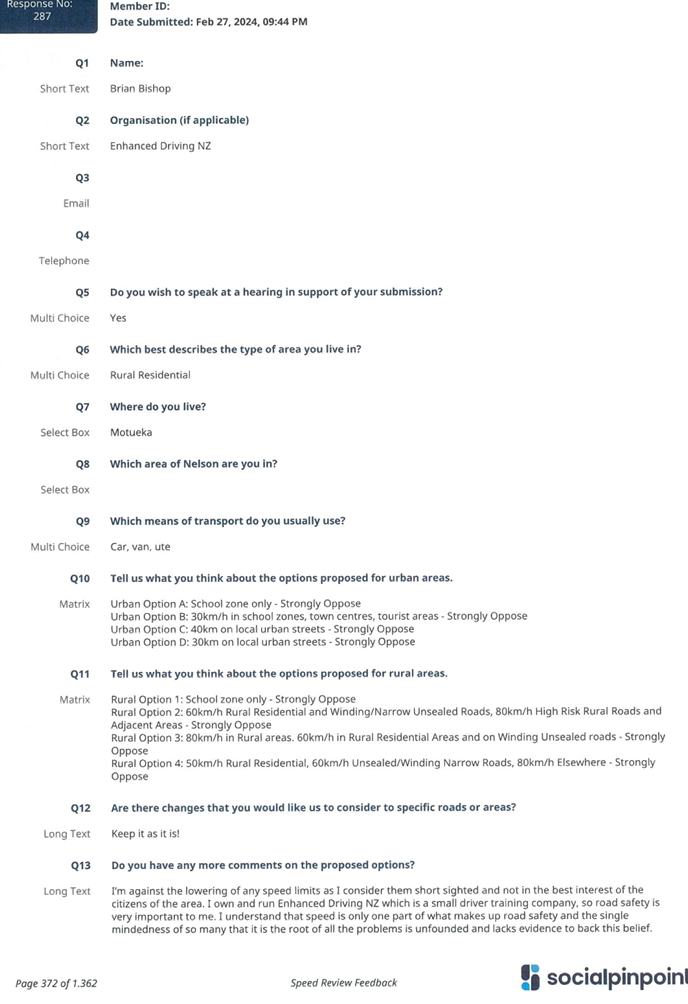
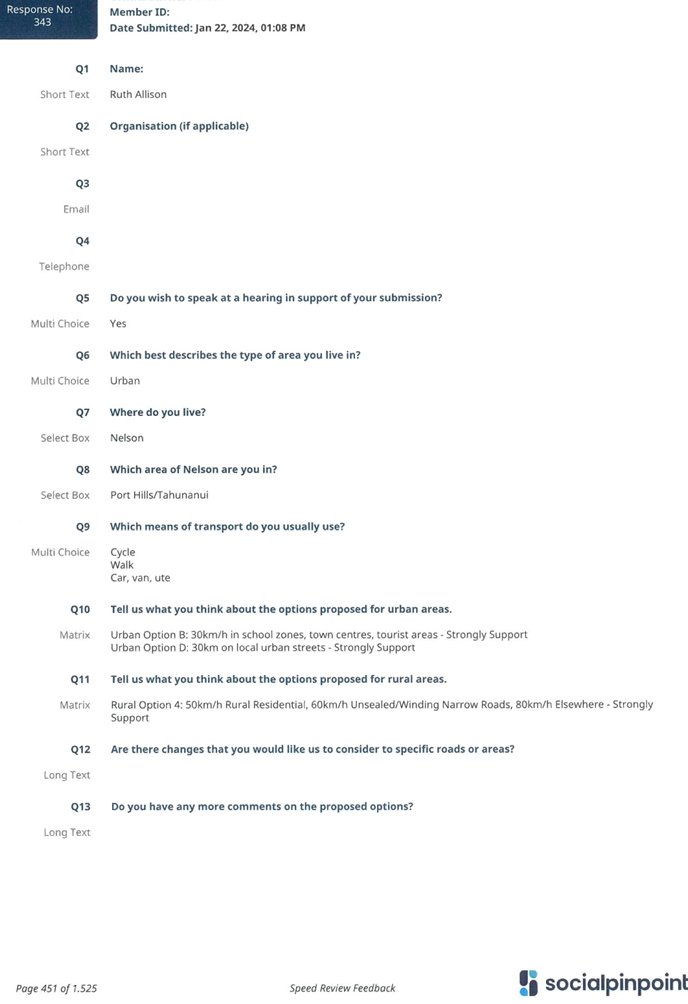
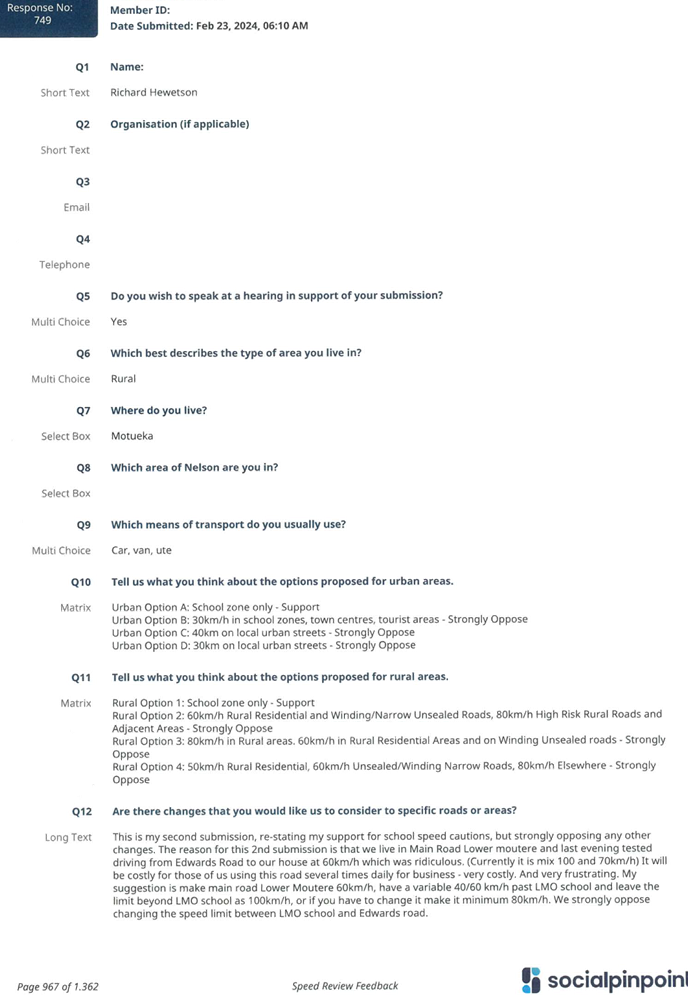
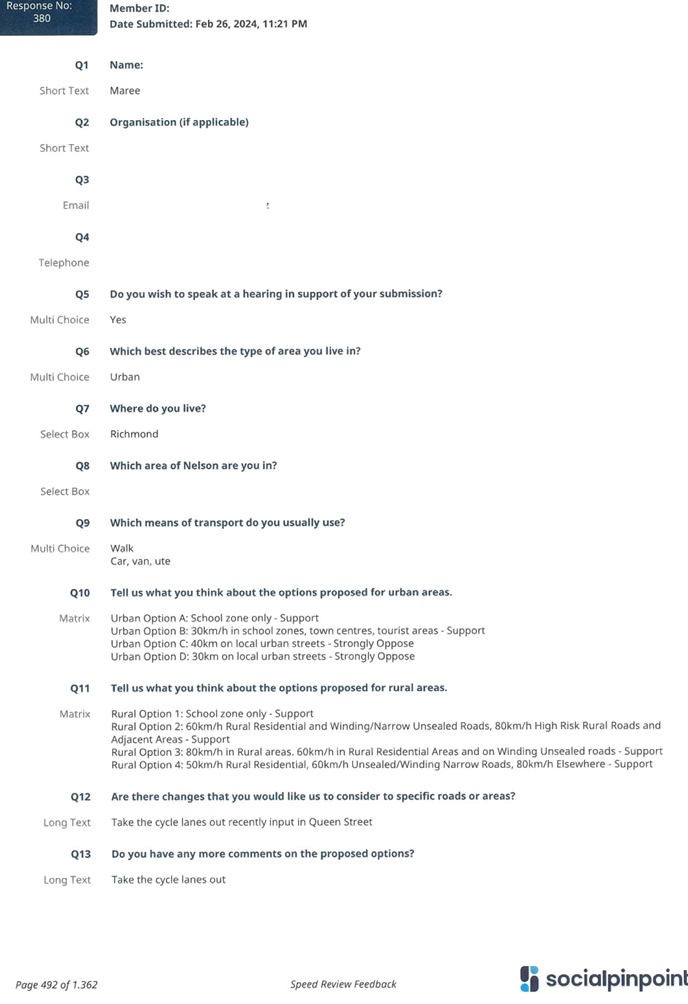
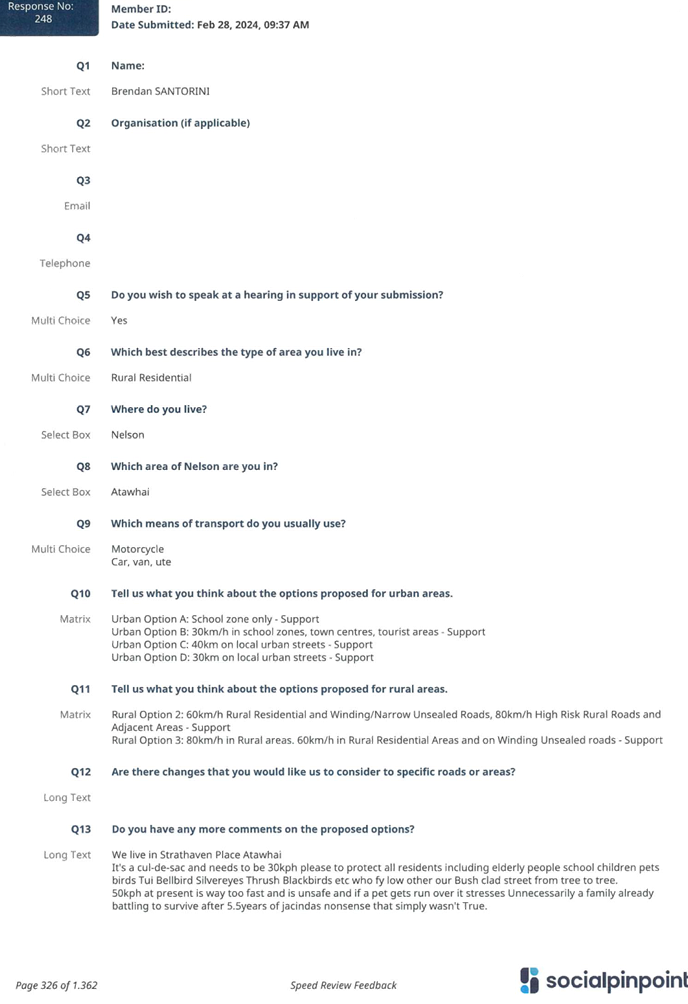
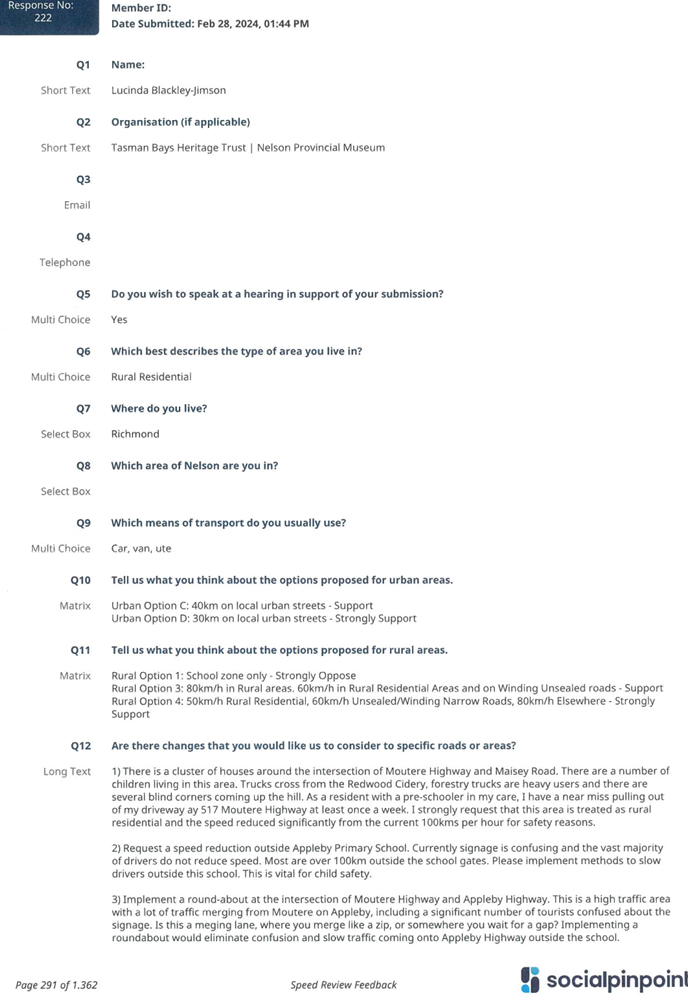
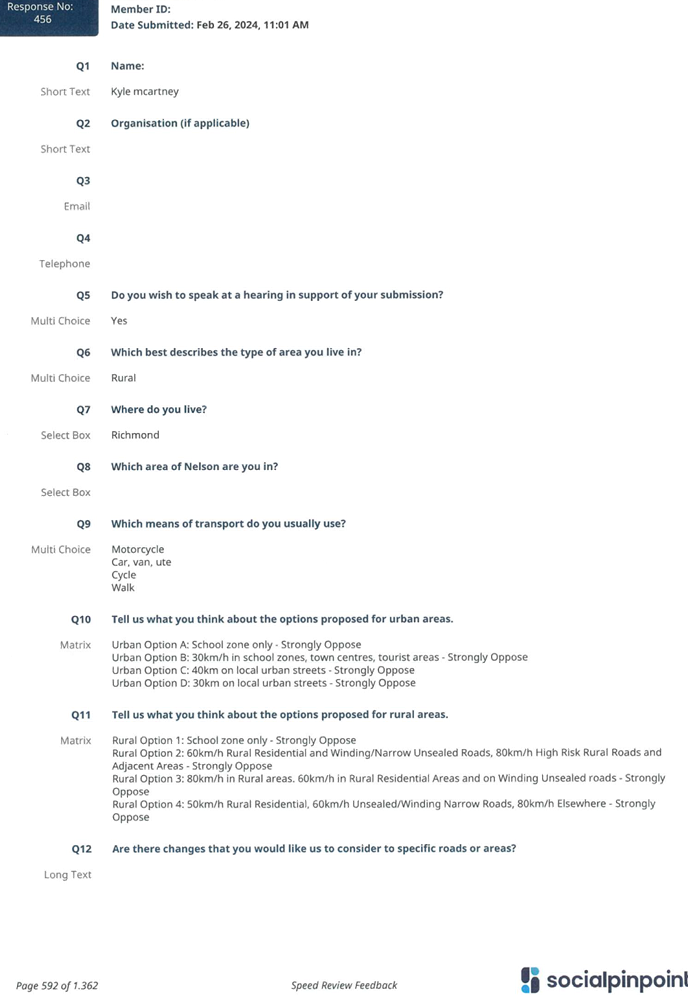
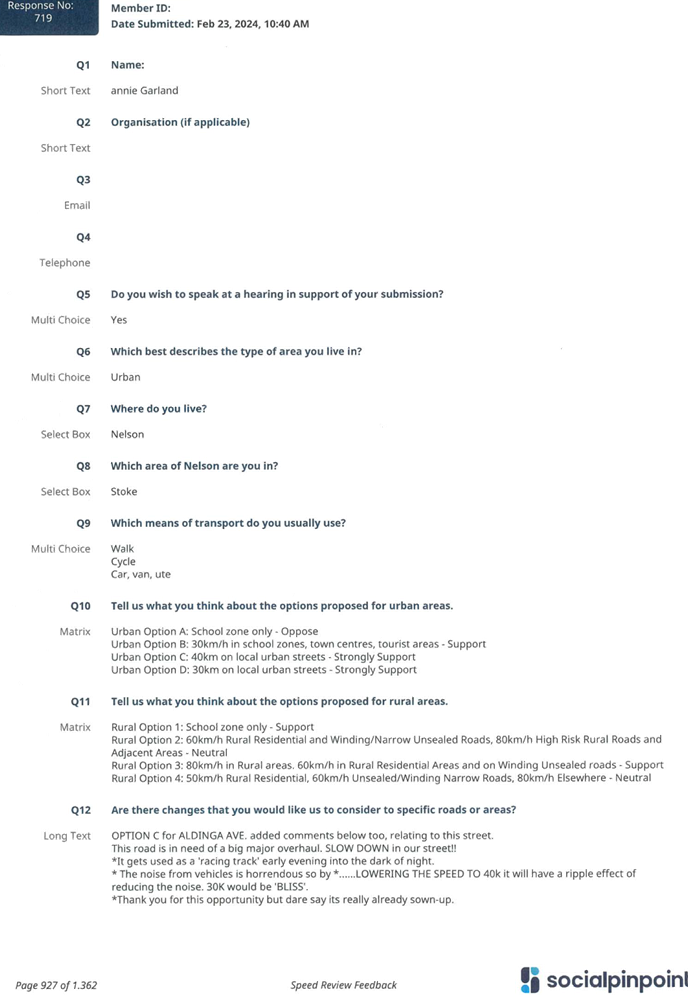
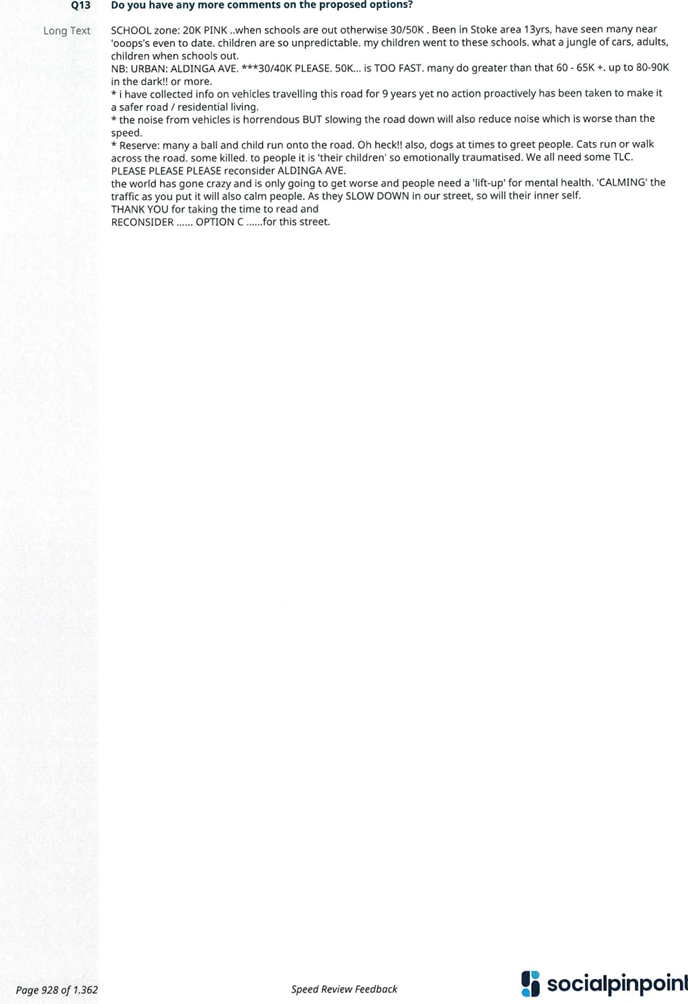
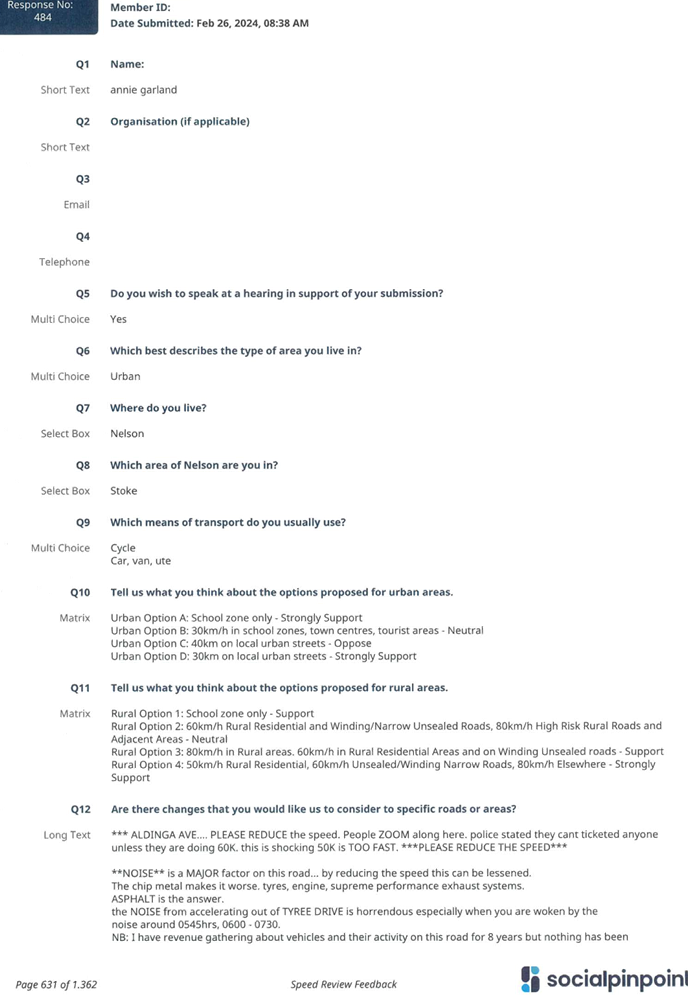
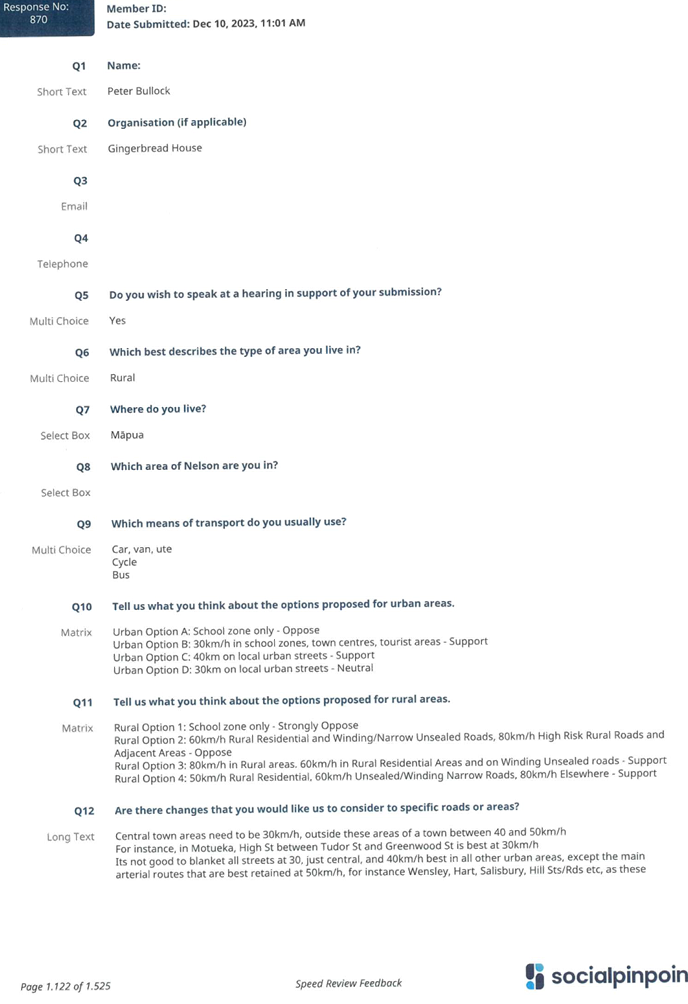
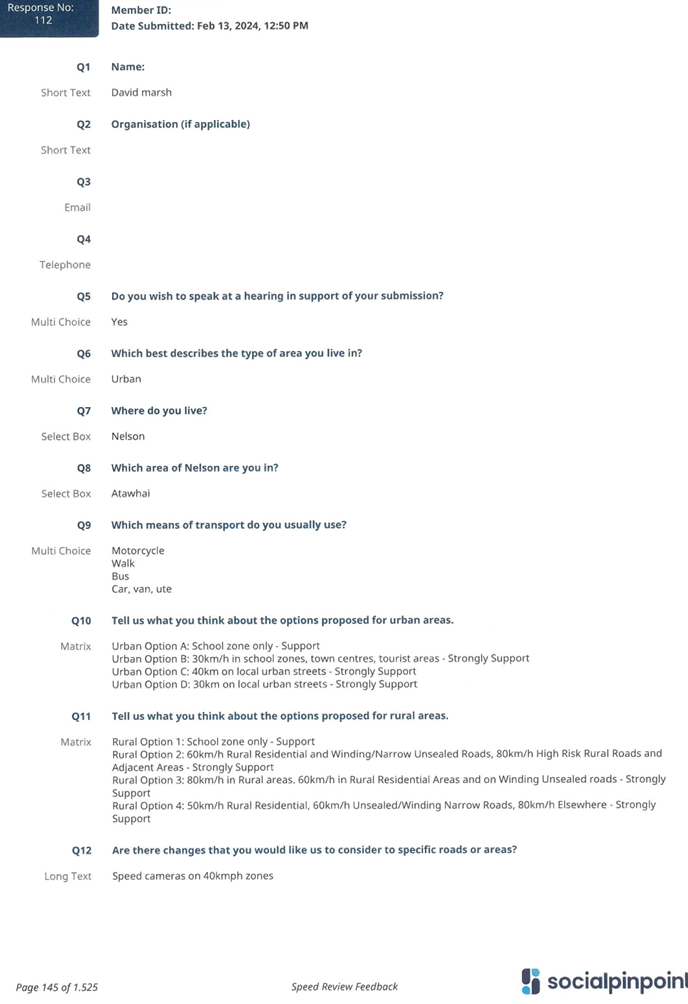
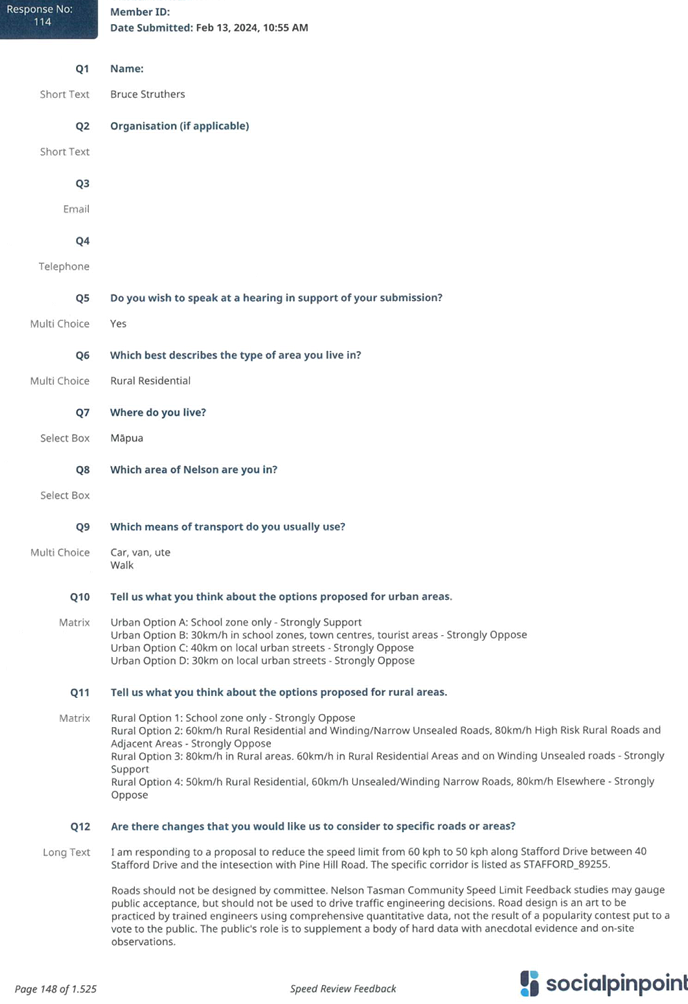
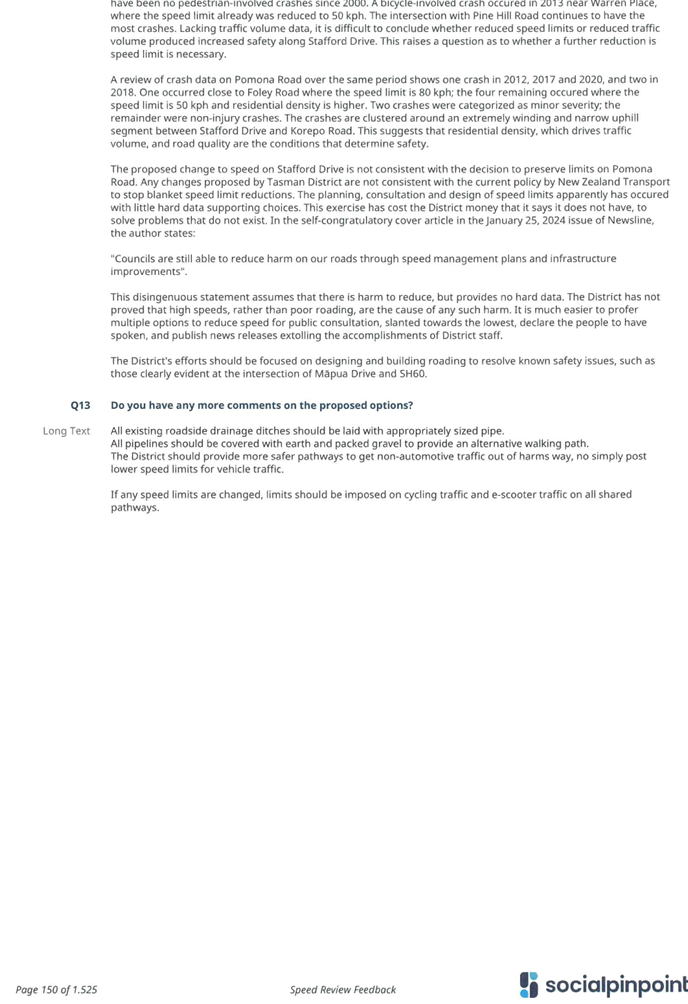
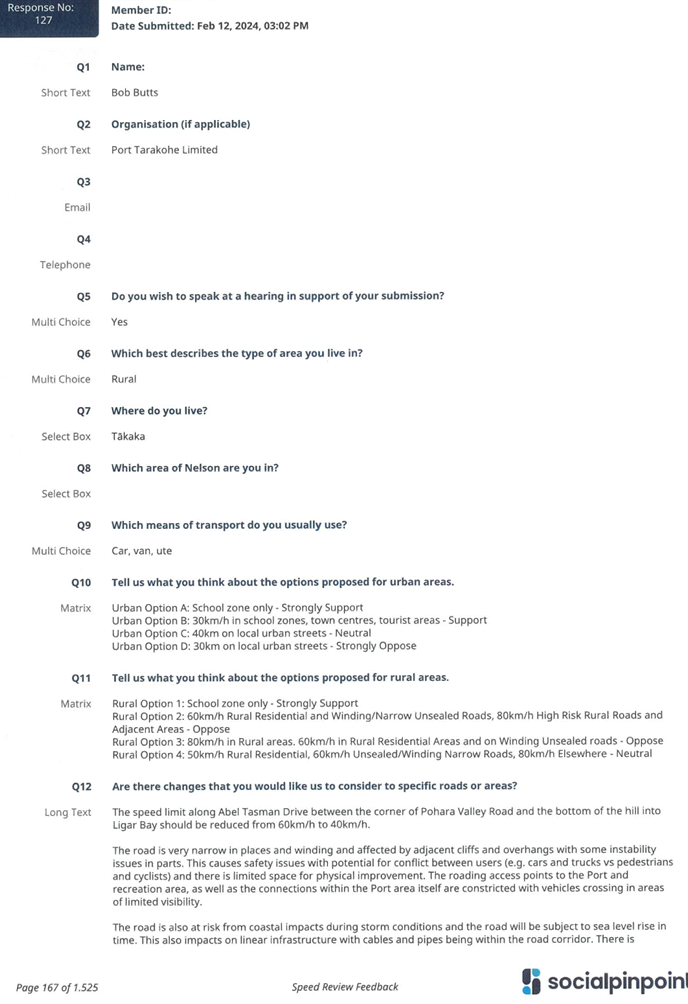
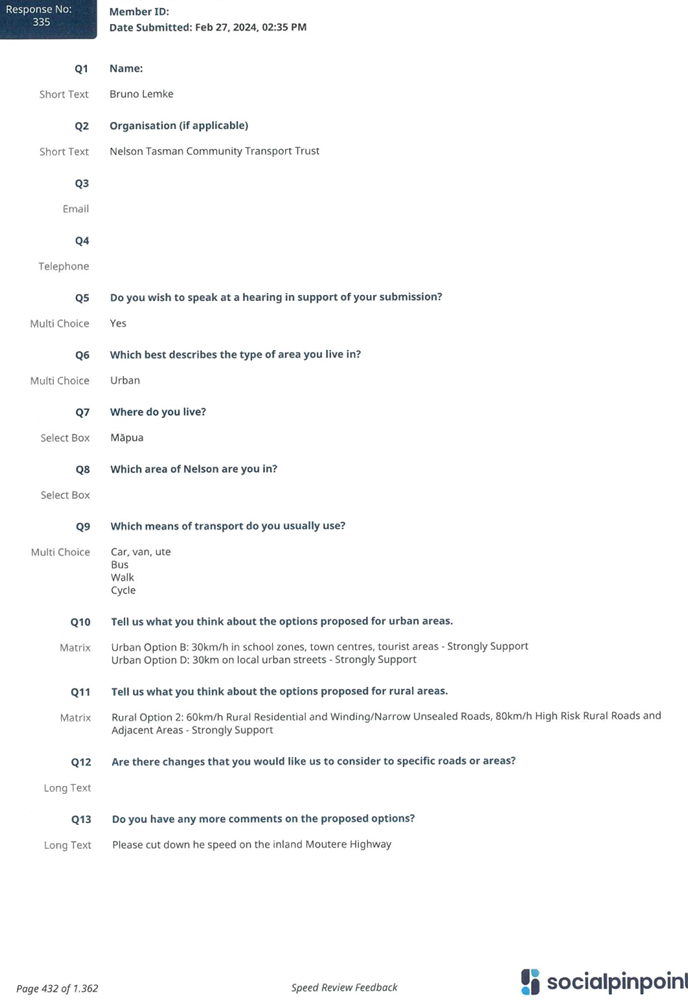
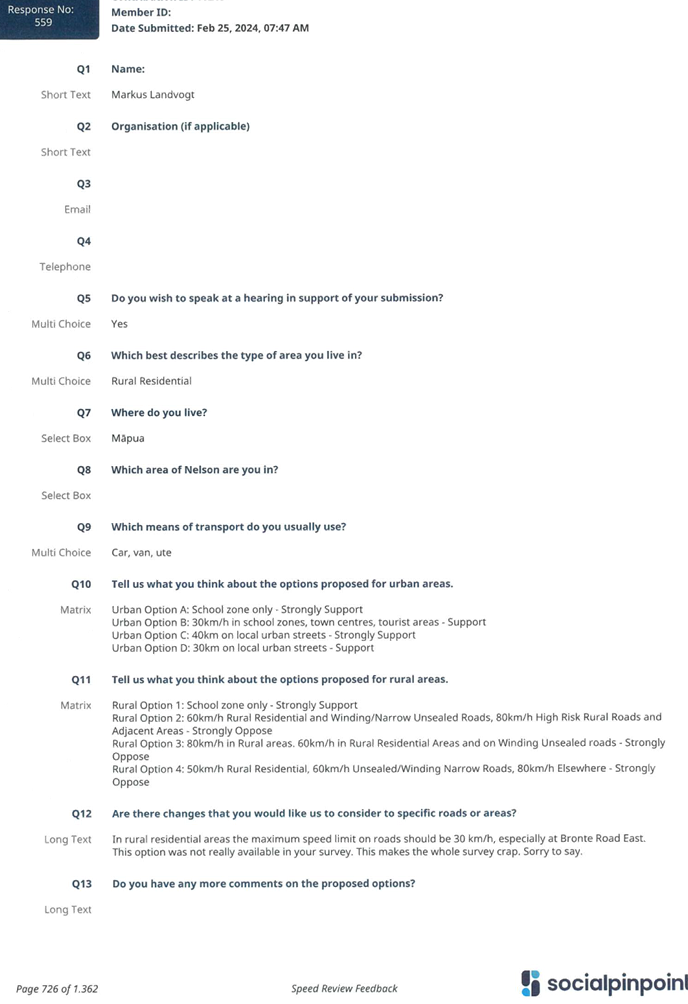
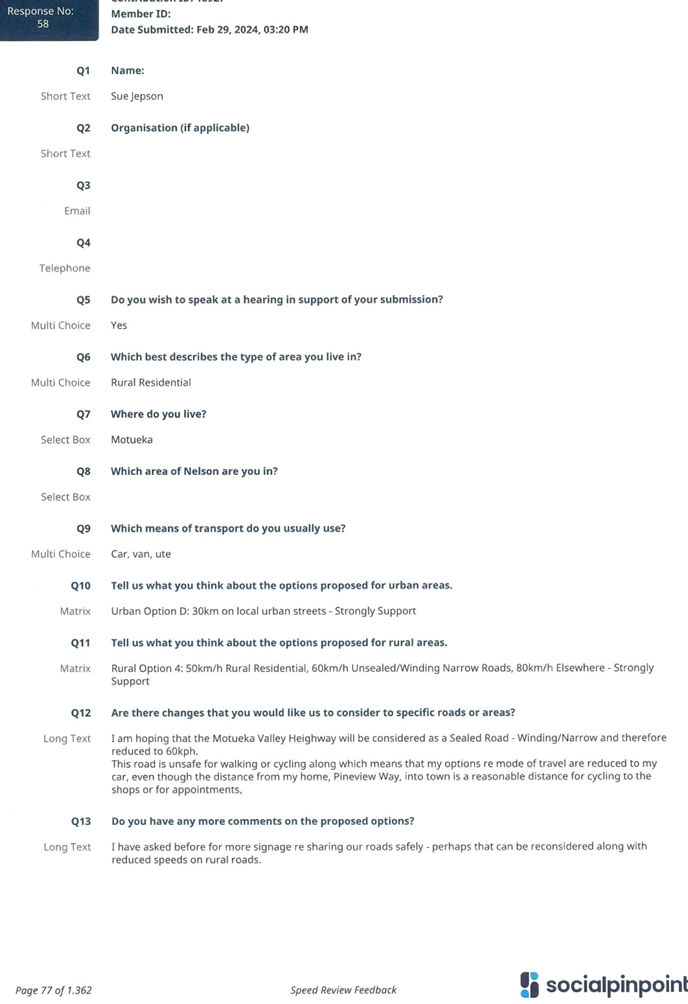
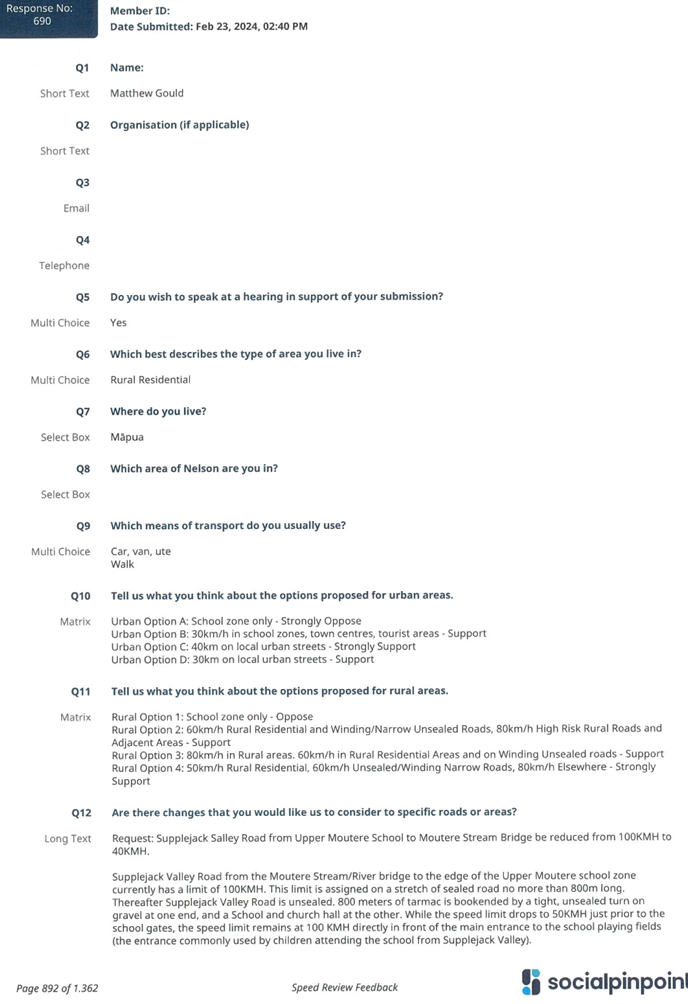
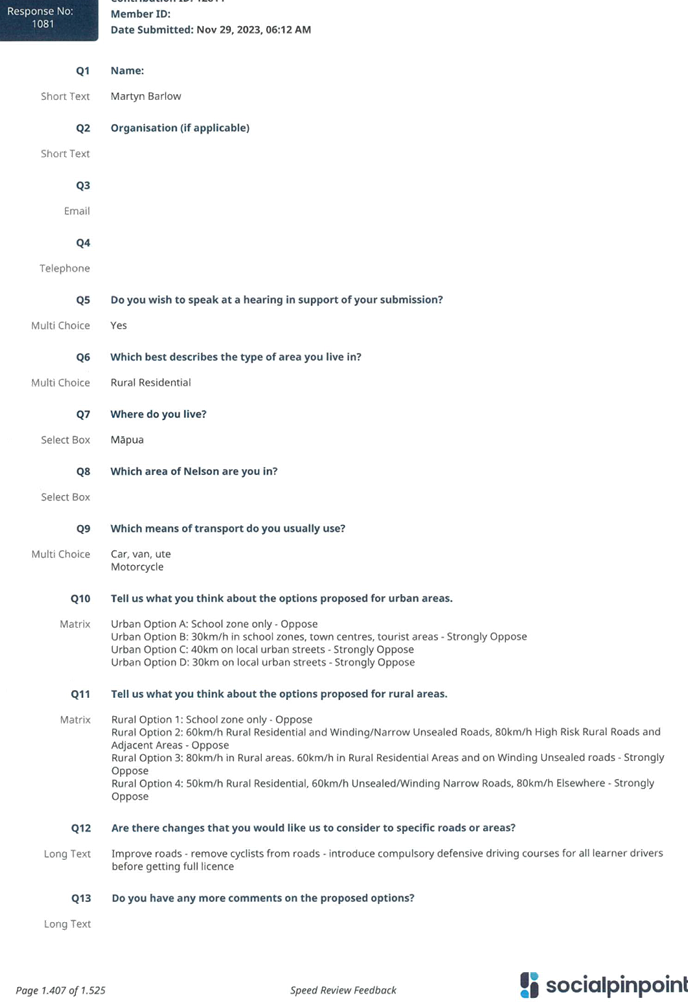
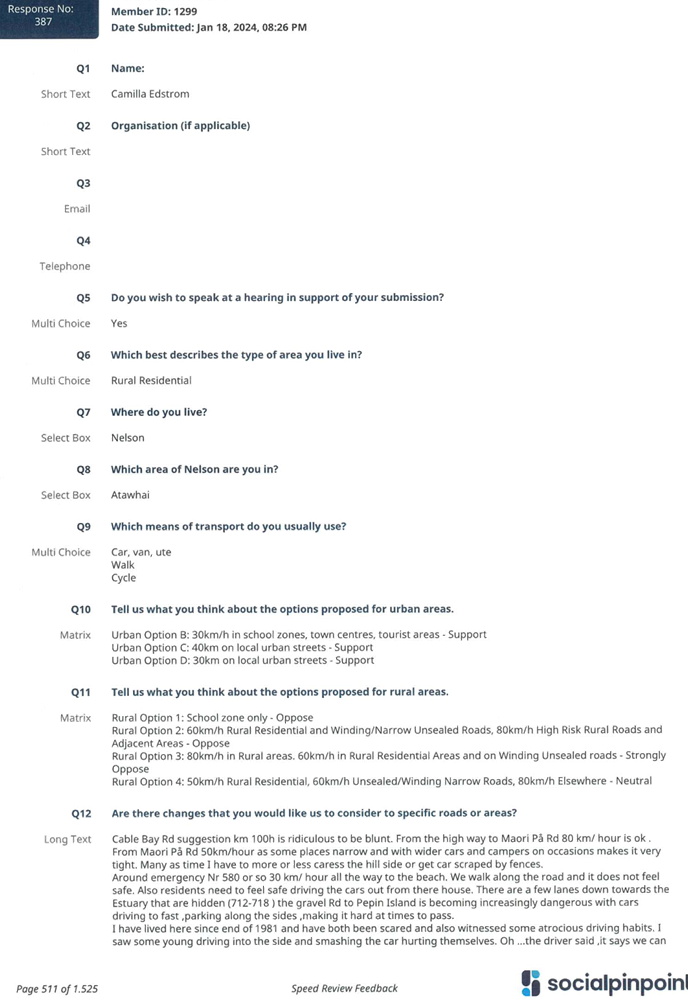
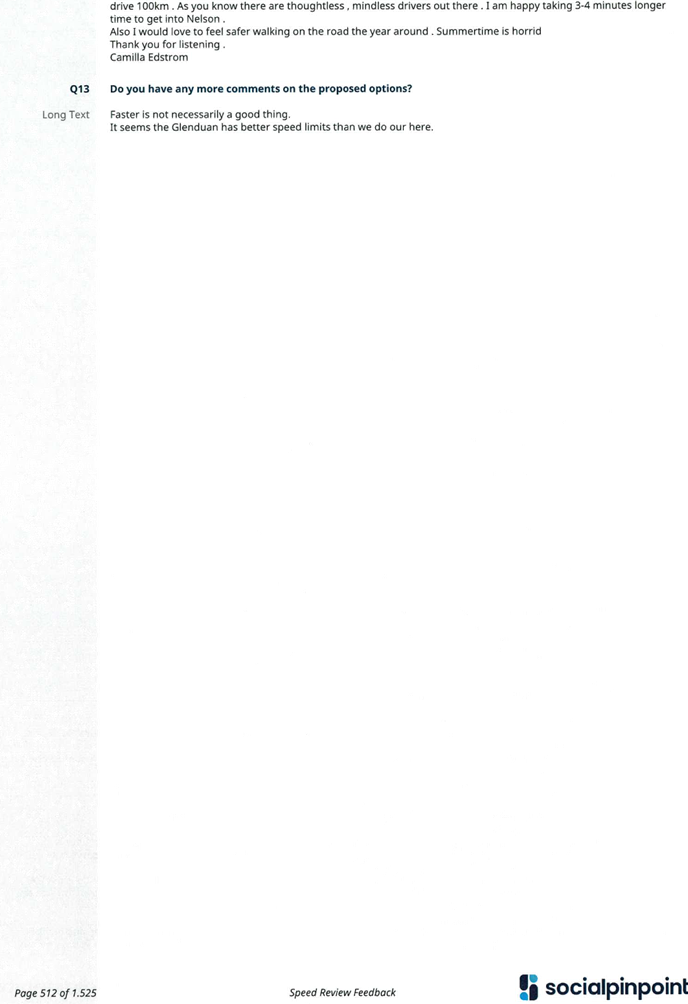
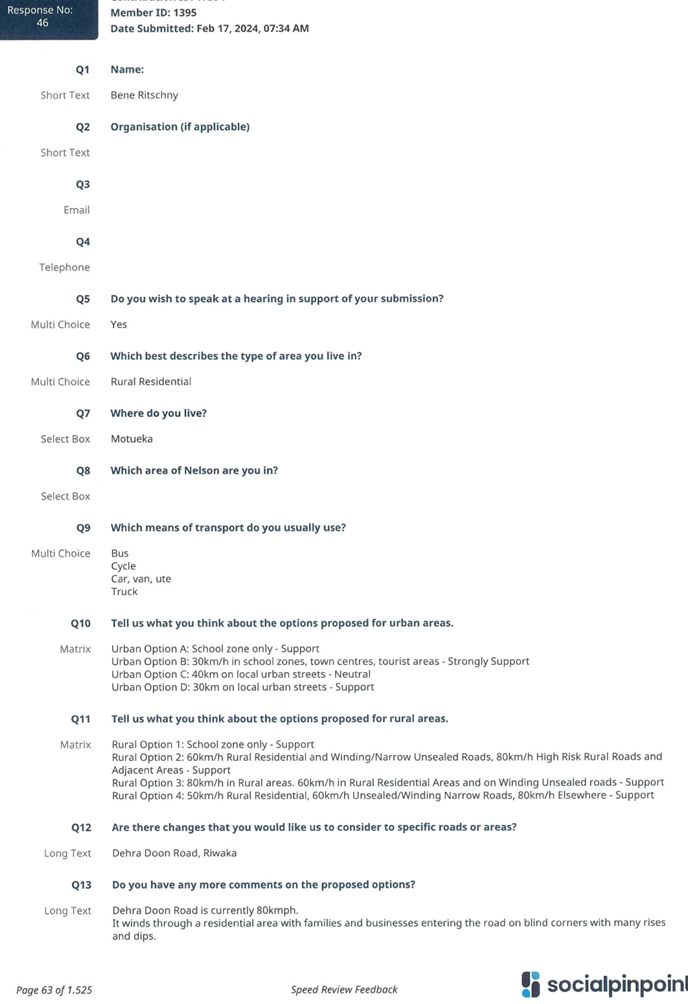
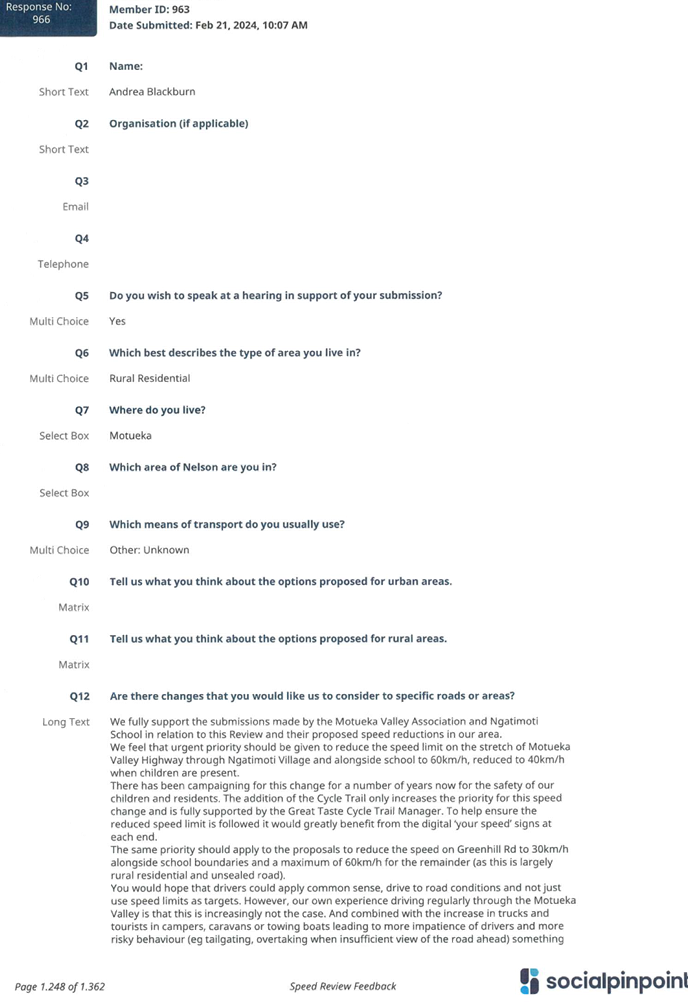
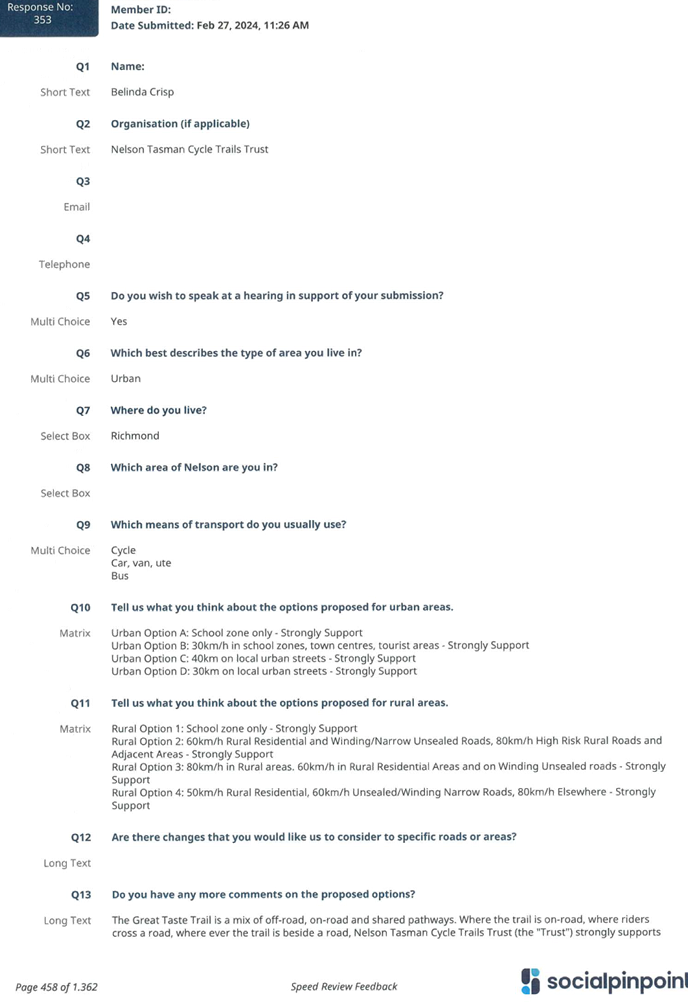
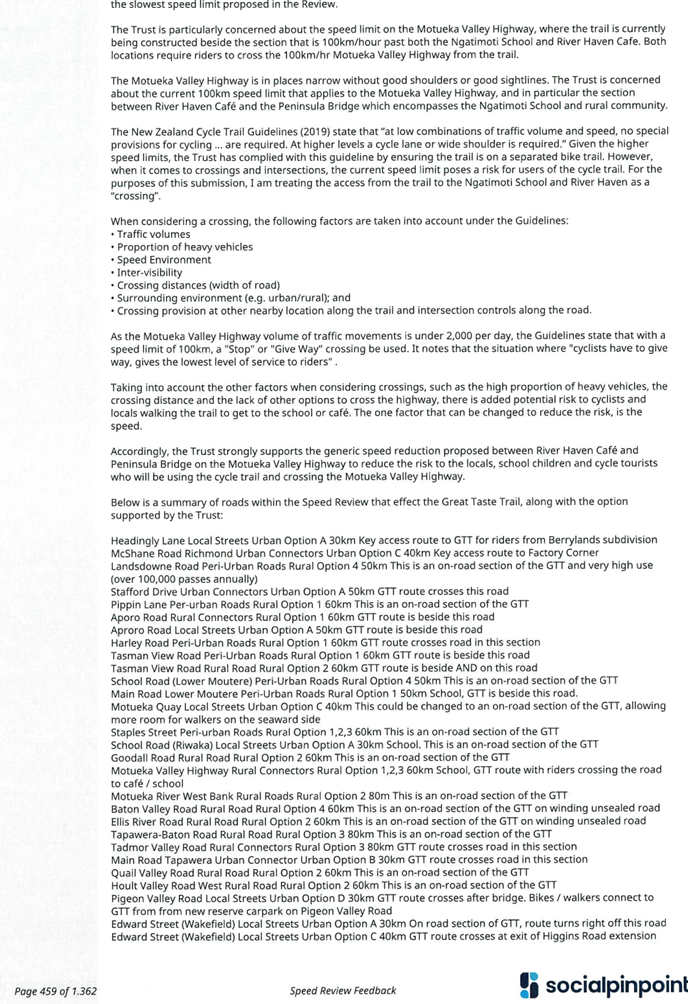
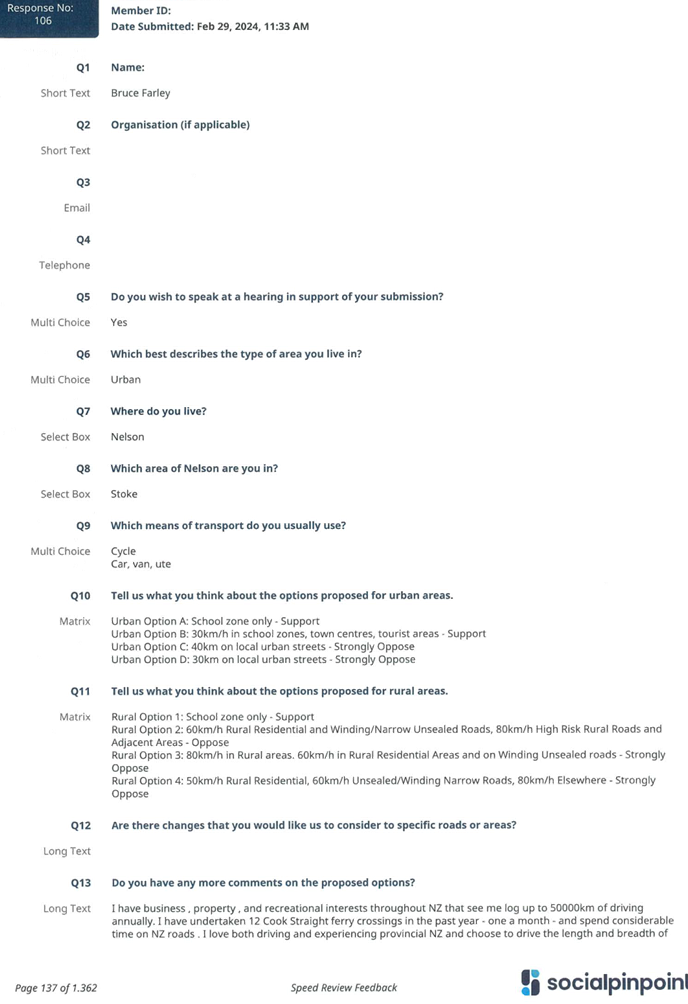
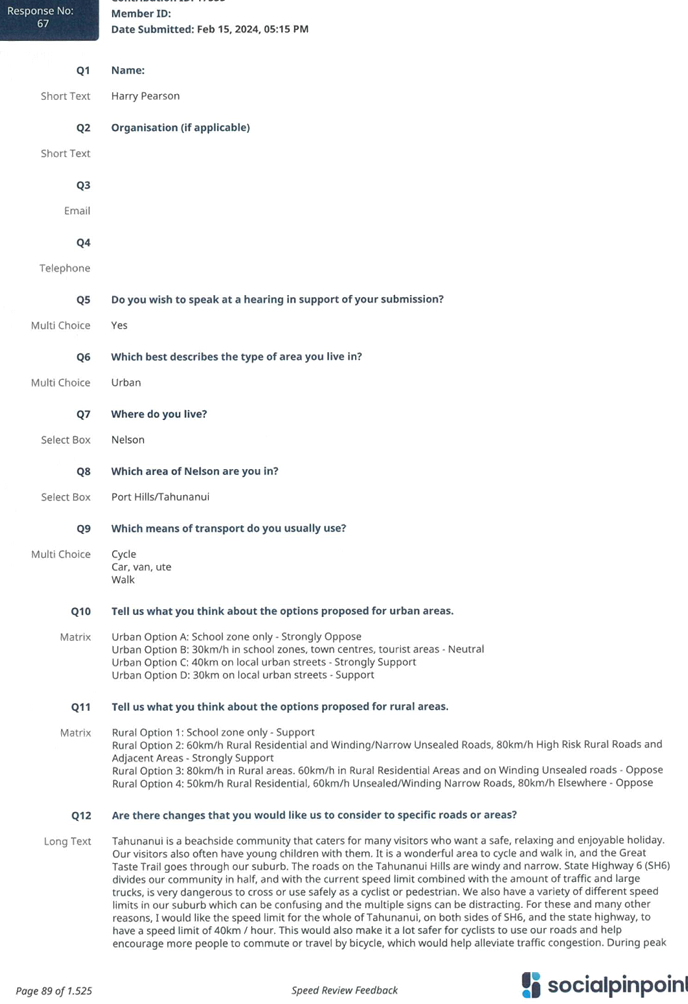
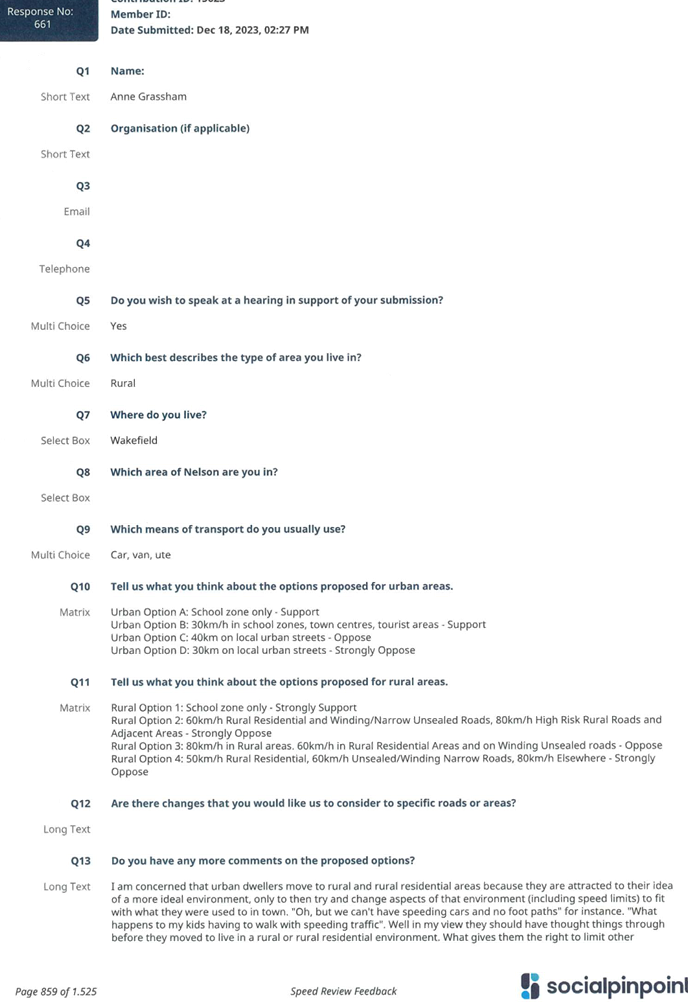
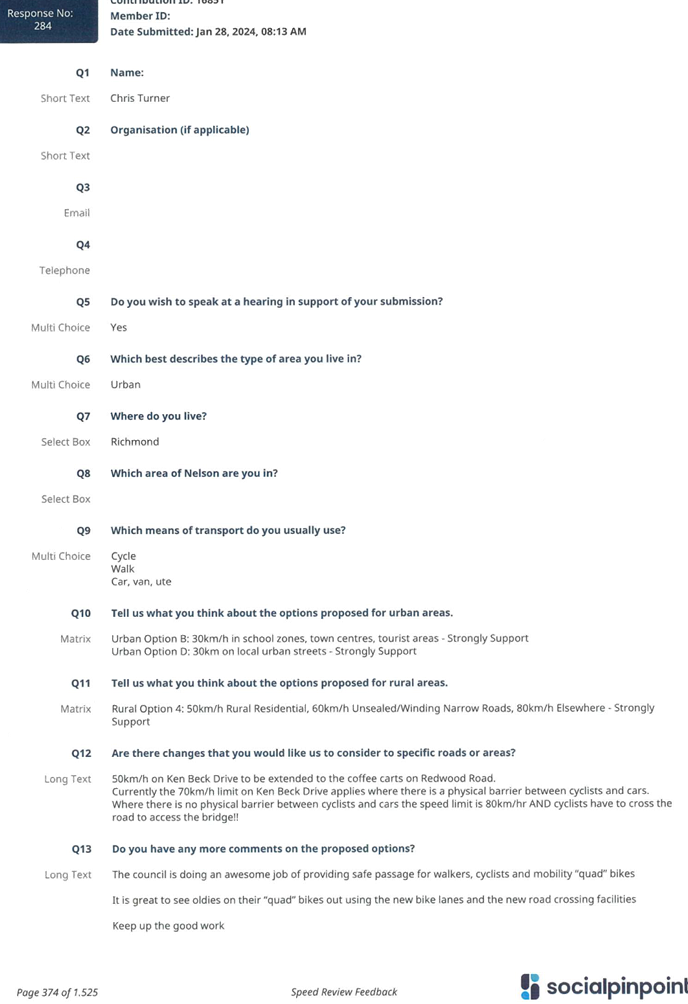
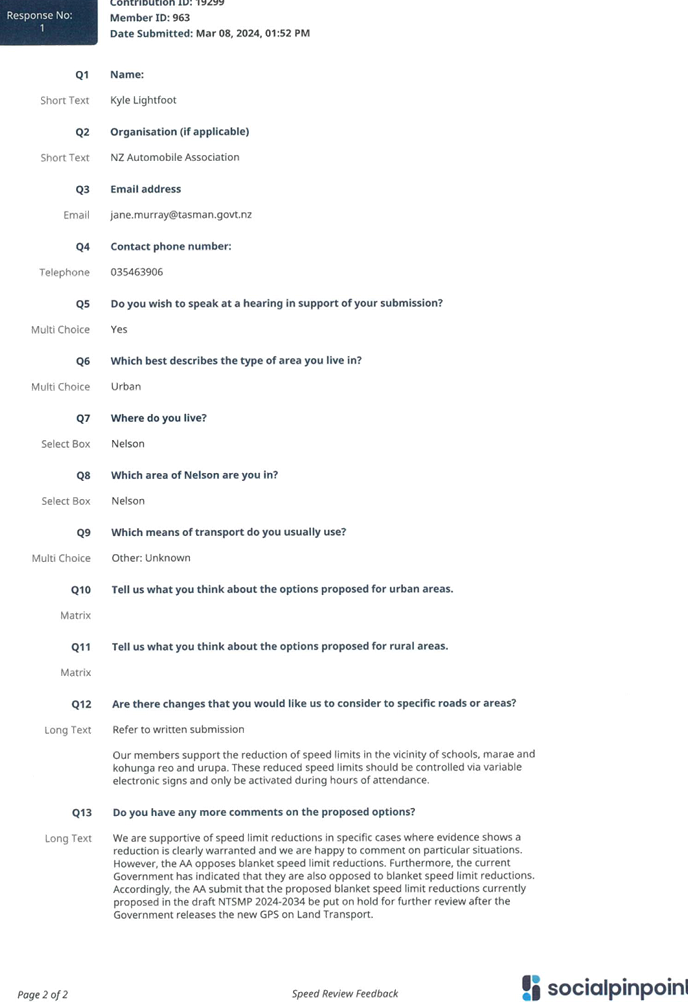
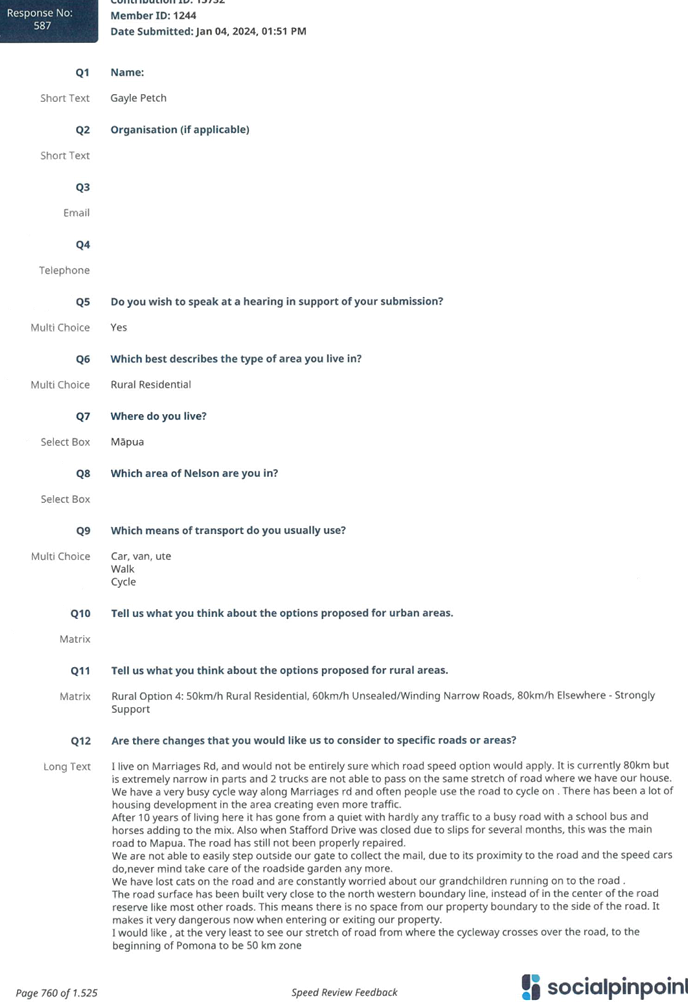
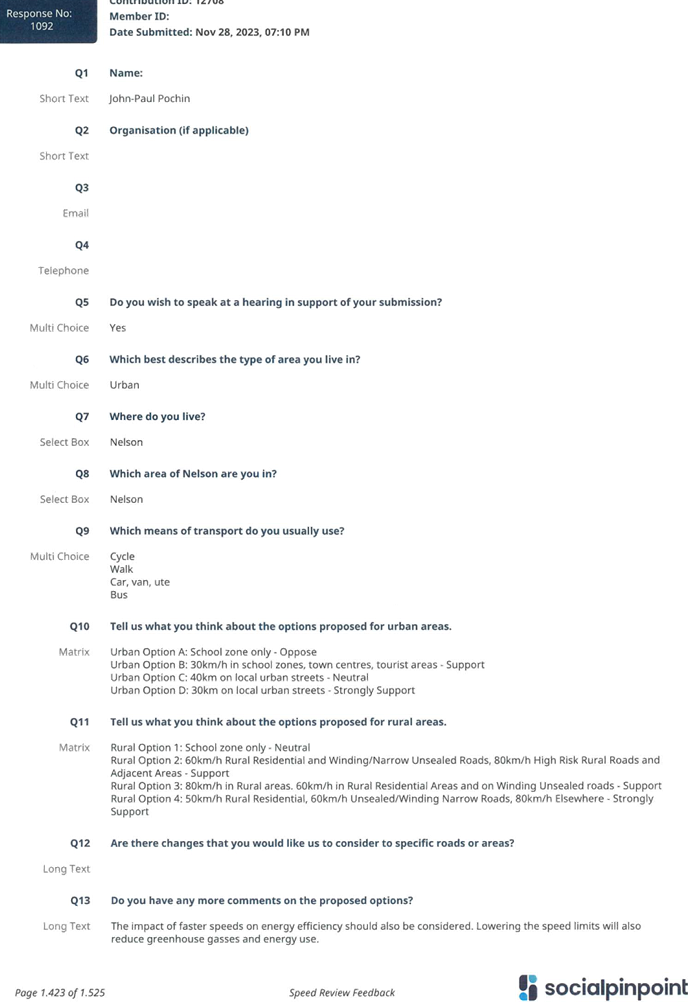
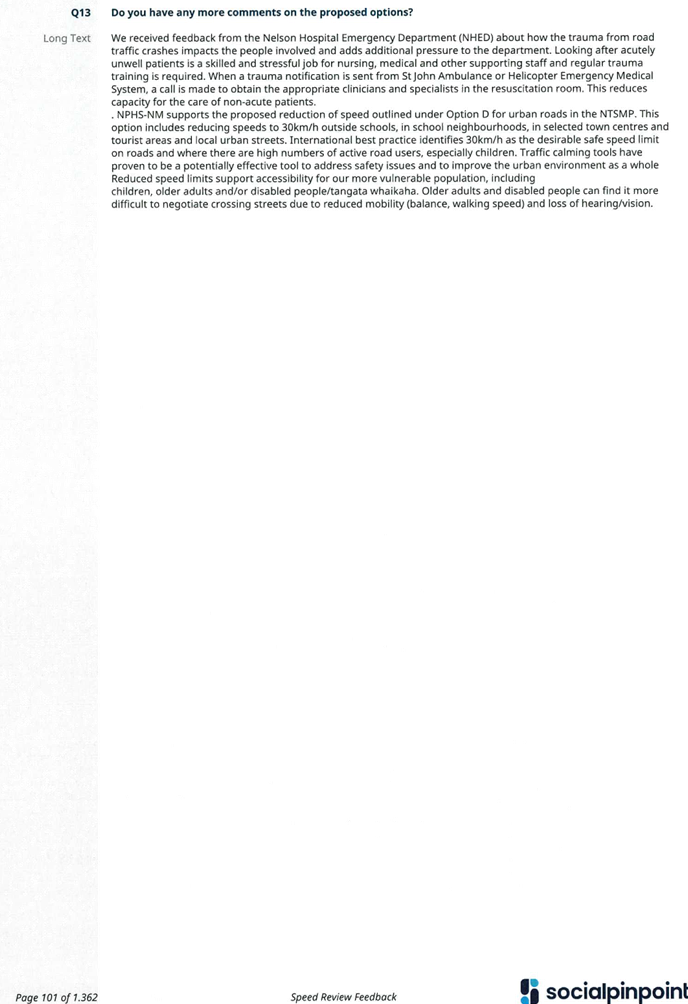
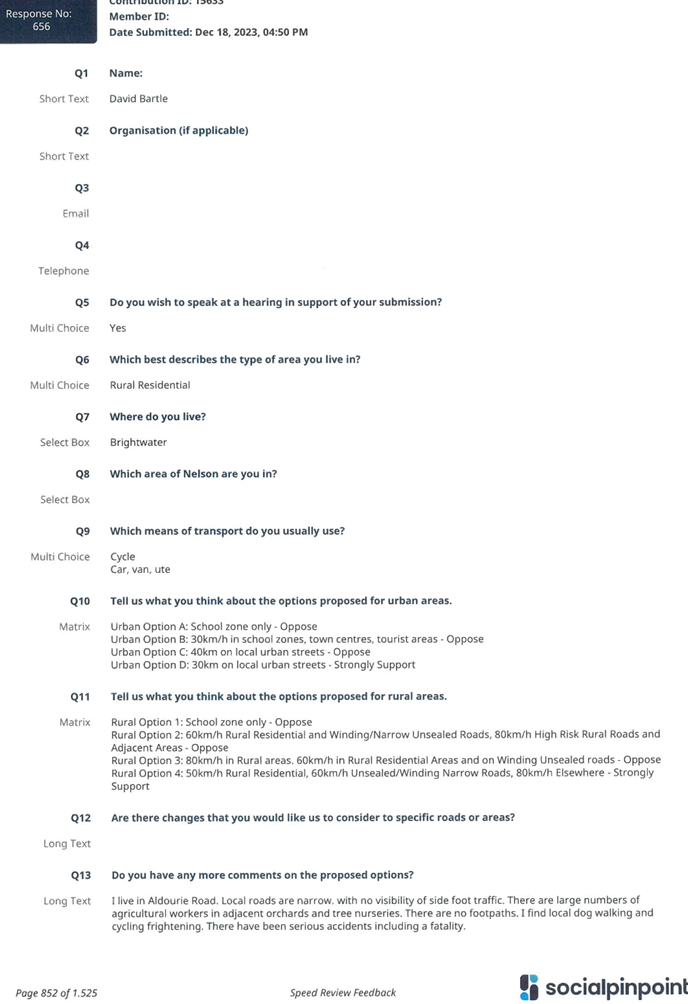
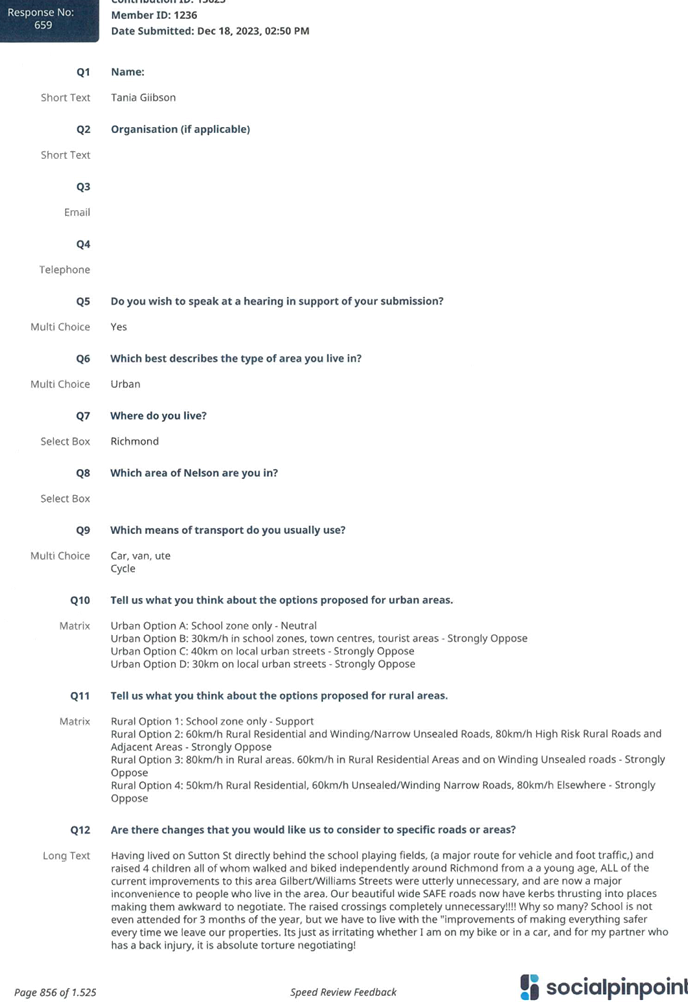
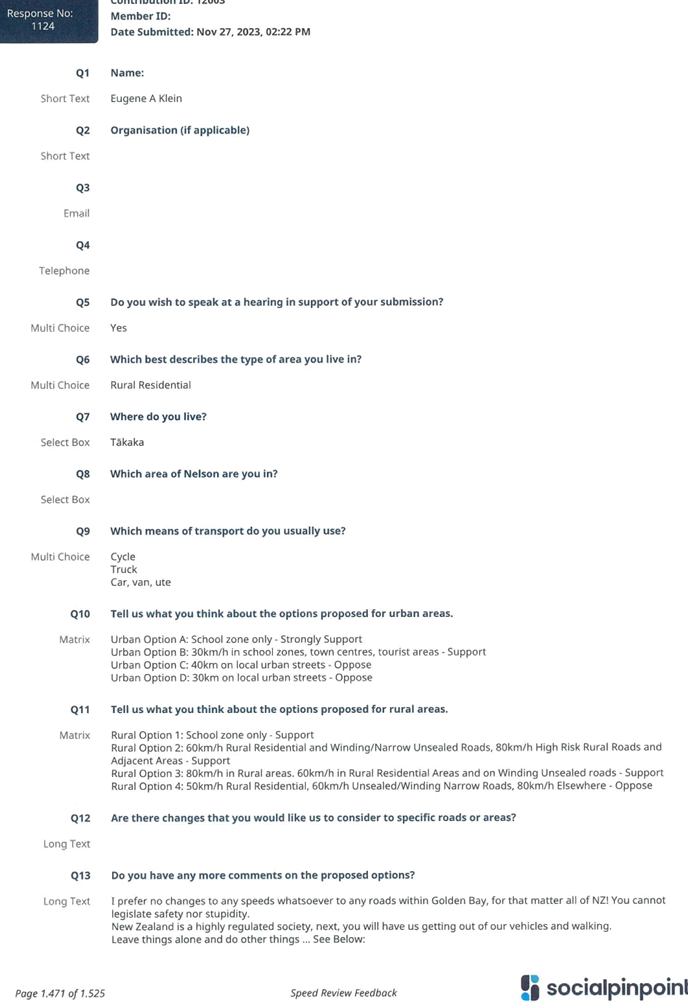
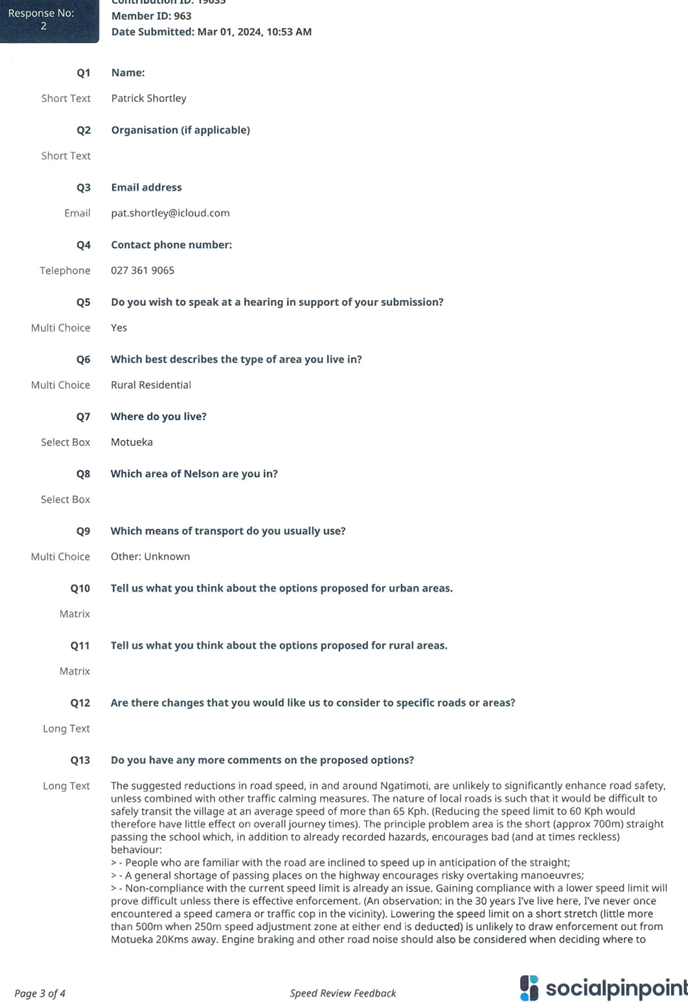
(JNTRTC) with a high-level overview and a copy of the 2,247 submissions
received during the draft Speed Management Plan consultation in advance of the
JNTRTC hearing where they will hear oral submissions from those that have
indicated they wish to speak.
That the Joint Nelson
Tasman Regional Transport Committee
1. receives the Draft 2024 Speed Management Plan Hearing
Report RNTRTC24-04-2;
and
2. receives
the 2,247 submissions on the Draft Speed Management Plan (online link in
paragraph 4.5 of the agenda report) and notes the list of speakers’
submissions in Attachment 1 to the agenda report; and
3. receives
the tabled updated hearing schedule; and
4. notes that staff will prepare and circulate advice on
the issues raised at the hearing in a report to the 19 June 2024 deliberations
meeting.
Speed Management Plan
3.1 The Land Transport Rule: Setting of Speed Limits 2022 empowers Road
Controlling Authorities to set speed limits for roads under their control
through Speed Management Plans.
3.2 The draft Speed Management Plan is a joint document, with Nelson
City Council (NCC), Tasman District Council (TDC) to create a plan for
implementation of safer speeds in Nelson Tasman. This plan excludes speeds on
State Highways.
3.3 Three JNTRTC workshops have been held (4 April 2023, 11 May 2023 and
27 October 2023) to understand the key issues, opportunities and benefits on
the management of speeds.
3.4 On 27 November 2023, the new government – a coalition formed
by the National Party with ACT New Zealand and New Zealand First – was
sworn in.
3.5 On 8 March 2024 the government released its draft Government Policy
Statement (GPS) on Land Transport 2024 for consultation. Consultation on the
draft GPS closed on 2 April 2024. The draft GPS outlines the government’s
plan for investing in land transport over the next 10 years.
3.6 As part of the GPS, the government has indicated it will amend the
Land Transport Rule relating to the setting of speed limits.
3.7 The Transport Minister, Hon Simeon Brown has indicated that the new
Rule will ensure that when speed limits are set, economic impacts, including
travel times, and the views of road users and local communities are taken into
account, alongside safety.
3.8 Following consultation, the Ministry of Transport will use the
feedback to provide advice to the Minister of Transport on the final GPS 2024.
The final GPS will come into effect by July 2024.
4.1 When
preparing a Speed Management Plan, a Regional Transport Committee must consult
in accordance with the principles specified in section 82 of the Local
Government Act (LGA) and may use the special consultative procedures specified
in section 83 of the LGA.
4.2 On 20 November 2024, the JNTRTC approved the draft Speed Management
Plan documents for public consultation. Consultation occurred between 29
November 2023 and 29 February 2024.
4.3 Eight options were put forward in the consultation document:
i. urban option A: do minimum, 30 km/h immediately
around schools;
ii. urban option B: 30 km/h in school zones, town centres and
tourist areas;
iii. urban option C: do minimum plus 40/km/h on other local
urban streets;
iv. urban option D: 30 km/h on local urban streets;
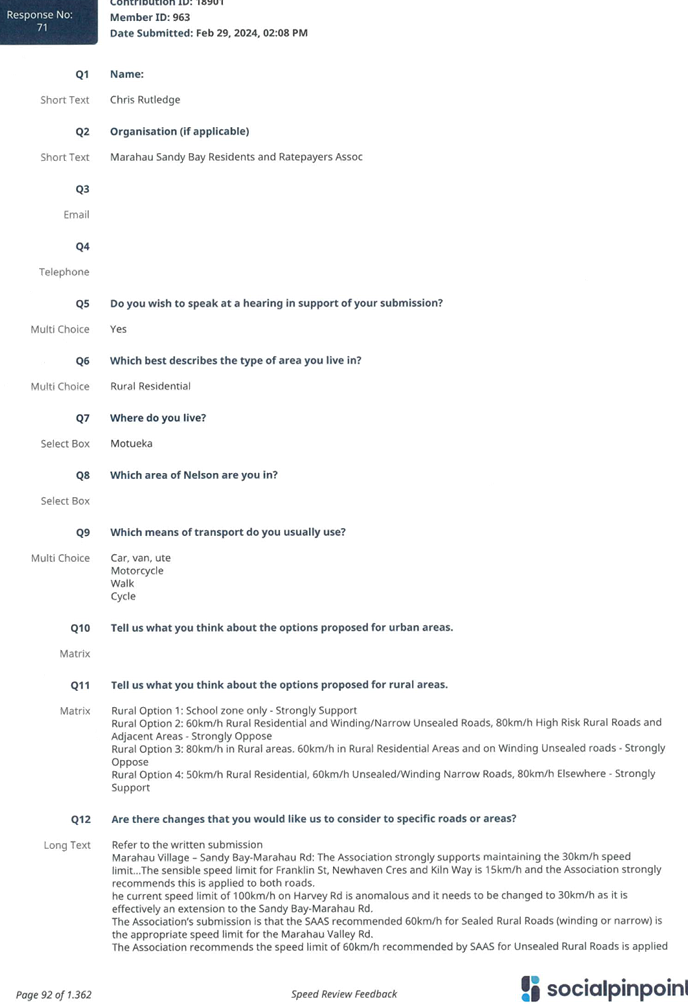
v. rural option 1: do minimum, 30 km/h or 60 km/h immediately
around rural schools;
vi. rural option 2: do minimum plus 60km/h rural residential and
winding/narrow unsealed roads, 80km/h high risk rural roads and adjacent areas;
vii. rural option 3: do minimum plus 80km/h in rural areas, 60km/h
in rural residential areas and on winding, unsealed roads; and
viii.rural option 4: do minimum plus 50 km/h rural residential, 60
km/h unsealed/winding/narrow roads, 80 km/h elsewhere.
4.4 To encourage submissions from a wide demographic, Council officers
attended 23 engagement sessions over the consultation period, including A&P
Shows. Consultation was also promoted via social media, print media and
in-person sessions at the region’s libraries.
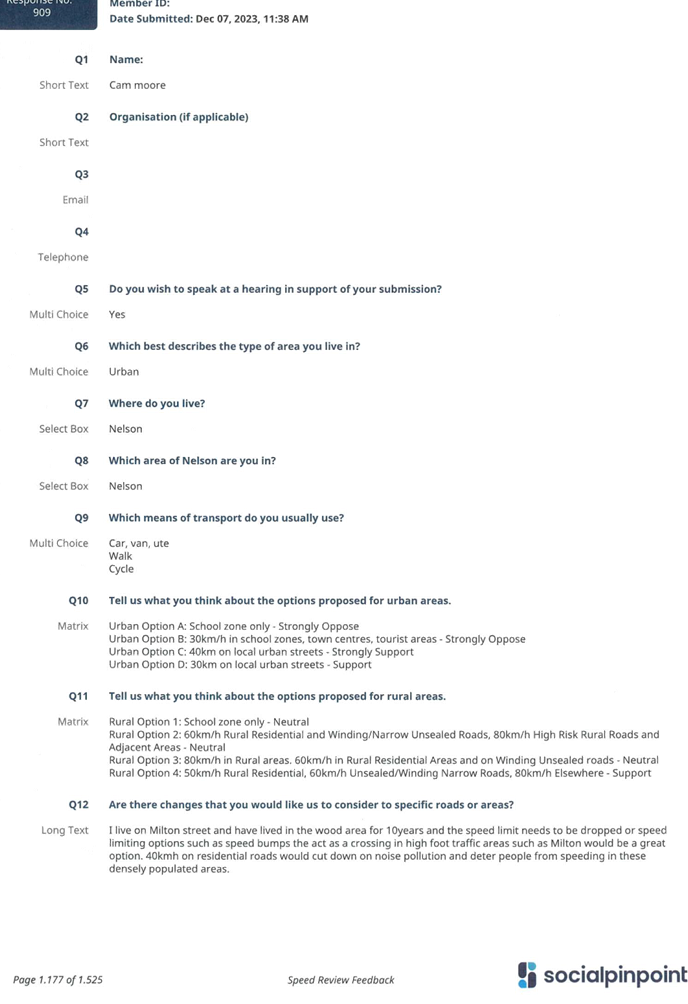
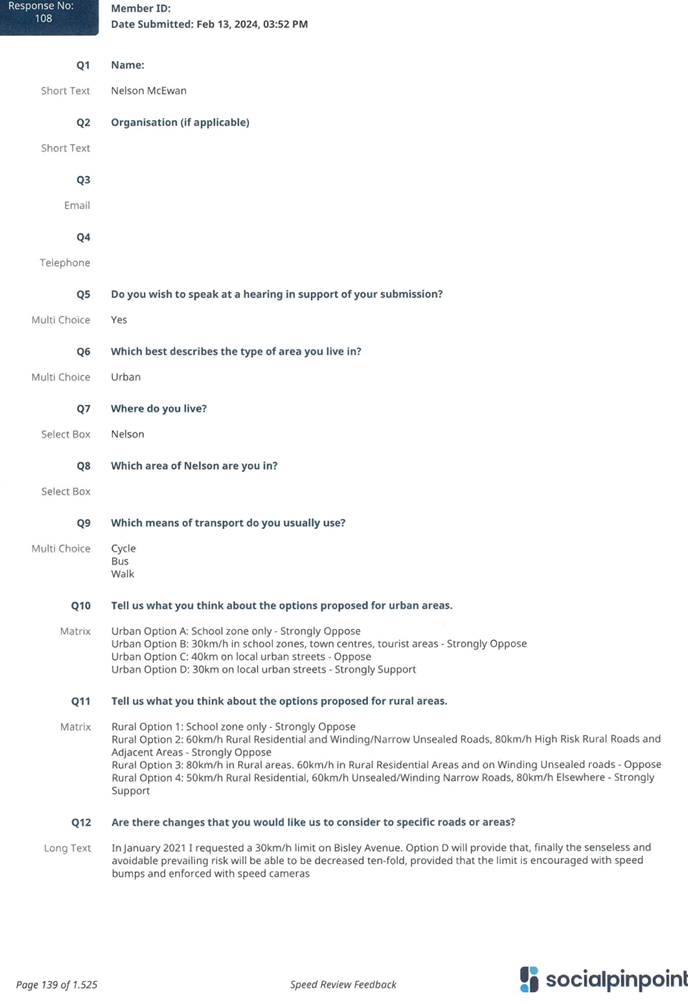
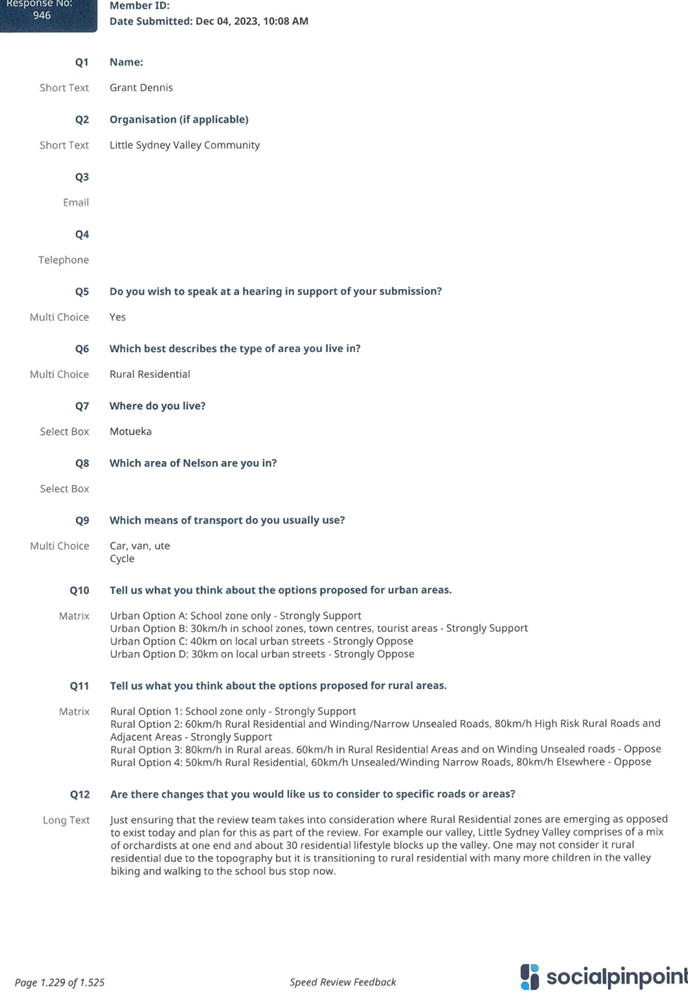
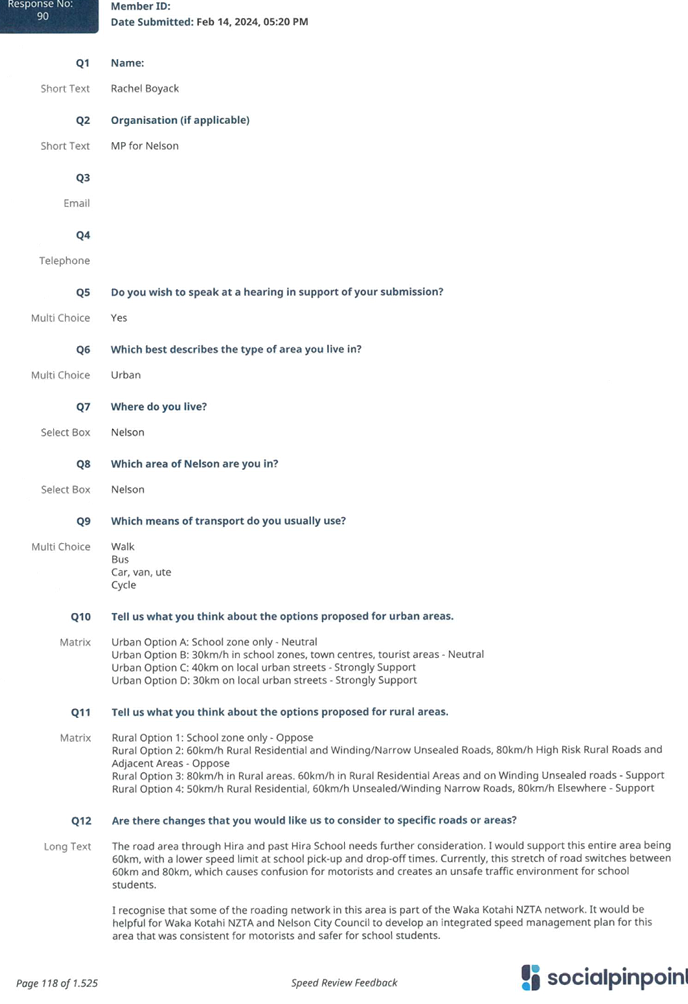
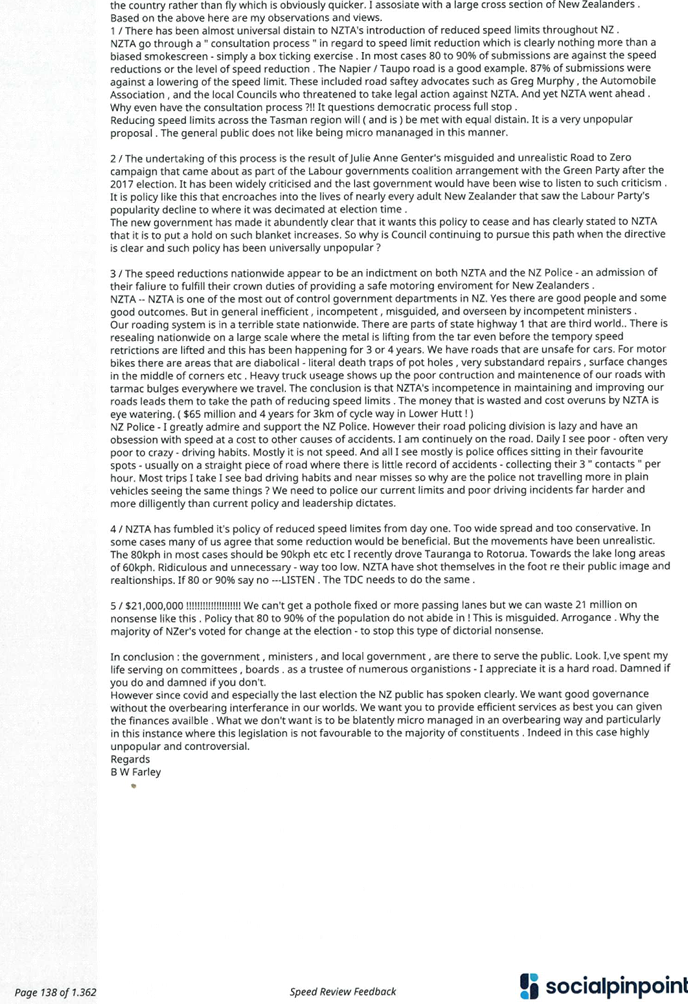
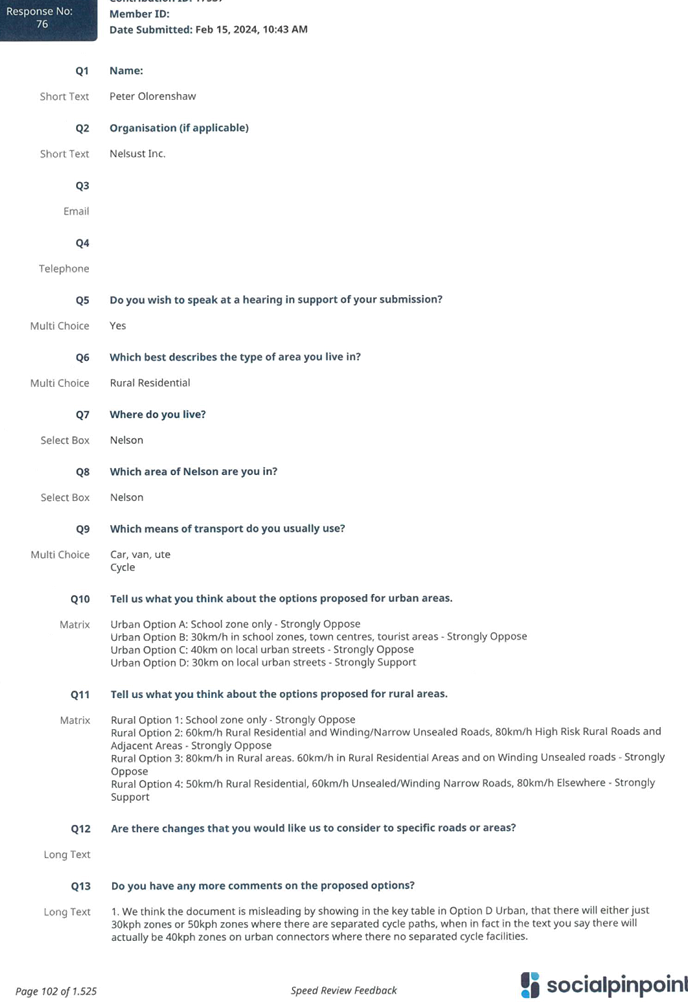
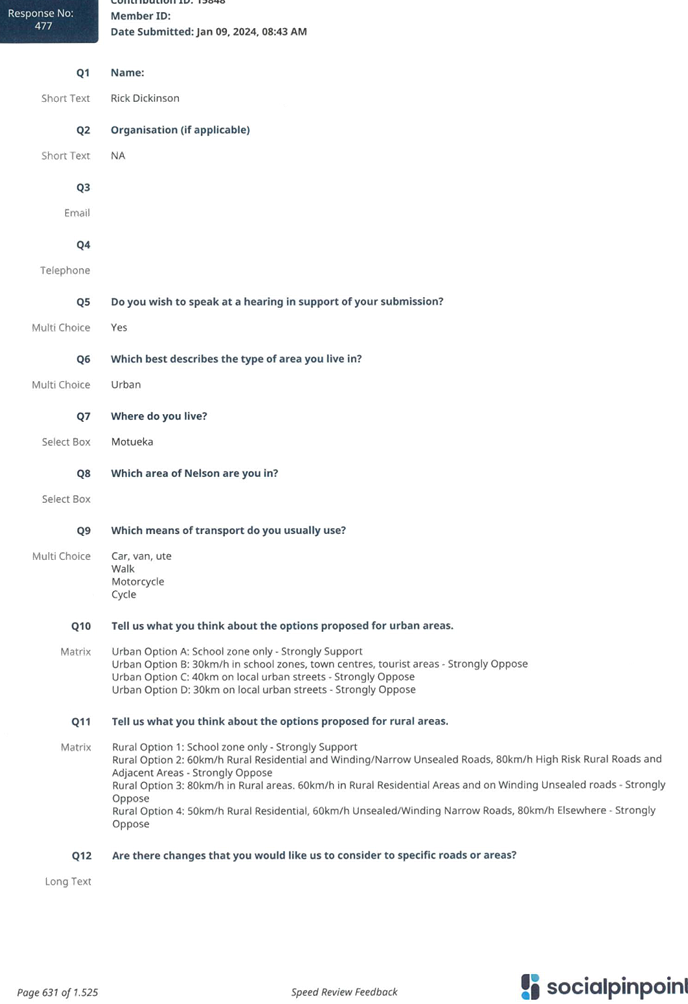
4.5 Over the consultation period 2,247 individual submissions were
received and 60 submitters have requested to speak at the hearing. Link to submissions
4.6 From the 2,247 individual submissions the following high-level
overview has been prepared based on the key themes from submissions.
4.7 The
graph below shows an overview of responses. A further breakdown of responses by
area will be provided in the deliberations report.
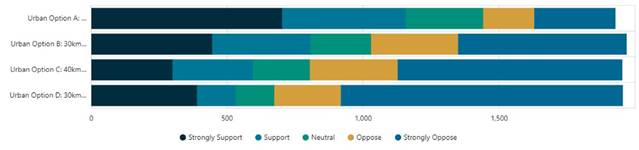 Question 10: Tell us what you think
about the options for the urban areas (93.5% response rate)
Question 10: Tell us what you think
about the options for the urban areas (93.5% response rate)
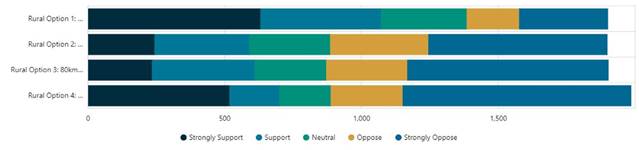 Question 11: Tell us what you think
about the options for the rural areas (94.5% response rate)
Question 11: Tell us what you think
about the options for the rural areas (94.5% response rate)
4.8 In
general, those wanting lower speeds (or other measures such as traffic calming
that will support lower speeds) gave specific examples of the impact of speeds
on their local communities. Those wanting status quo in relation to speed
tended to be more generic with their feedback.
4.9 ‘Reduce
speed’ was the most common theme for submitters’ comments with
the tag being used 752 times. ‘Current speed is an issue’
was used 529 times, when submitters identified a specific road or location
where the current speed was considered not suitable. Most submitters who
requested speed limit reductions cited reasons for the reduction.
4.10 The
following reasons were cited for lowering speeds (including the number of times
that the tag was used in the commentary):
(a) reduced speed makes walking and cycling
safer n=312
(b) creates a safer environment n=298
(c) children walking/cycling nearby n=205
(d) reduce accidents n=181
(e) around schools n=164
(f) narrow and/or winding roads n=128
(g) rural roads need to be lowered n=120
(h) residential streets need to be lowered n=90
(i) animals nearby n=81
(j) rural residential roads need to be lowered n=70
4.11 The
tag ‘Status Quo’ was used when submitters did not want speed
limits altered. This tag was used 380 times. Those in opposition to speed
changes cited the following reasons (includes number of times that the tag was
used)
(a) raise state highway speeds n=123
(b) drivers need more education rather than speed
reductions n=118
(c) more road maintenance n=107
(d) concerns about cost of implementation and/or cost on
businesses for slower
speeds n=101
(e) frustration at slow speeds n=94
(f) people should just drive to the conditions n=60
(g) prefer status quo but want school speeds to be
reduced only a school times n=43
(h) rural roads should remain at status quo
n=37
(i) congestion will be caused as a result of slow
speeds n=33
(j) drivers will be more inattentive with slow
speeds n=17
4.12 We
had a range of general concerns related to speed management. These comments
were from people who were both supportive and not supportive of speed
reductions:
(a) other road improvements requested n=123
(b) dangerous behaviour on roads was noted n=108
(c) consistency of speed signs was important n=82
(d) more enforcement n=74
(e) need intersection improvements n=63
4.13 There
were 164 submissions relating specifically to lowering speeds around schools:
4.13.1 60% of respondents who mentioned schools in their
comments also wanted to see speed limits lowered in general;
4.13.2 40% of respondents mentioned a specific school which
they supported lower speeds for; and
4.13.3 51% mentioned that they wanted their children to be
able to walk or cycle safely to school and lower speeds meant that the school
journey felt safer.
4.14 Around
15% of submitters who made specific comments wanted to keep the status quo,
citing reasons such as impact on travel times, frustration at slower speeds,
and the impact on congestion if speeds were slower. 10% of those who wanted the
status quo did support speed reductions around schools but did not want to see
other speed changes.
4.15 We
received a range of comments from people wishing to see a reduction in
accidents on our roads. 29% of respondents who wanted speeds reduced in order
to reduce accidents cited specific crashes that they had witnessed on
Nelson/Tasman roads. This included first responders, medical professionals,
journalists and those who have been involved in serious and fatal crashes.
4.16 There
was a range of other comments relating to whether people would be able to
comply with speed reductions or how it would be enforced. Key themes here
included whether police had the resources to enforce the changes and whether
too many changes would lead to people being confused and non-compliant.
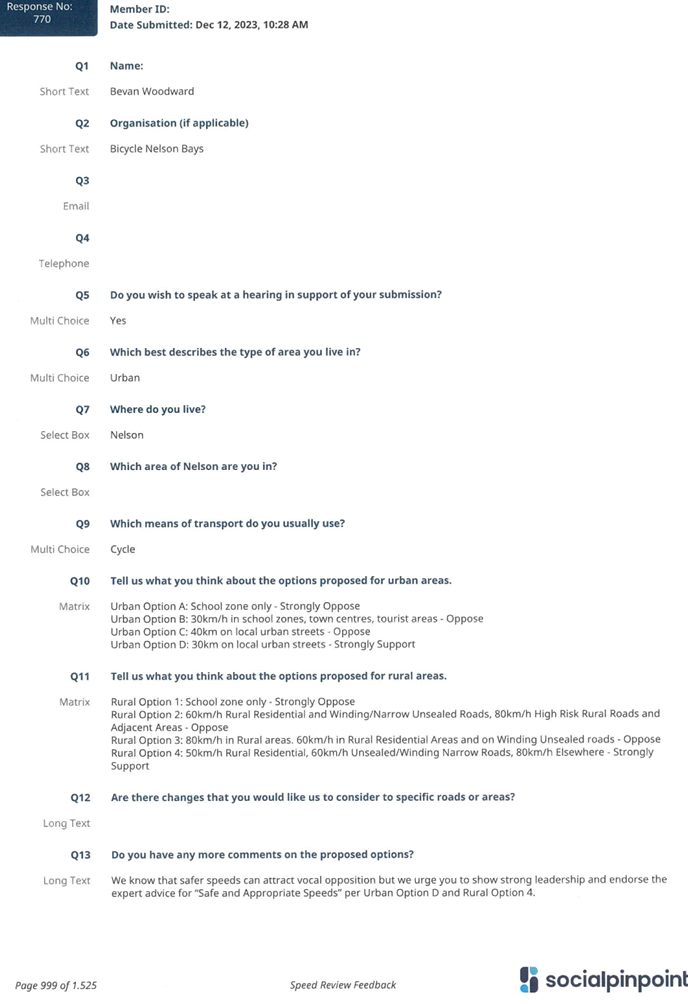
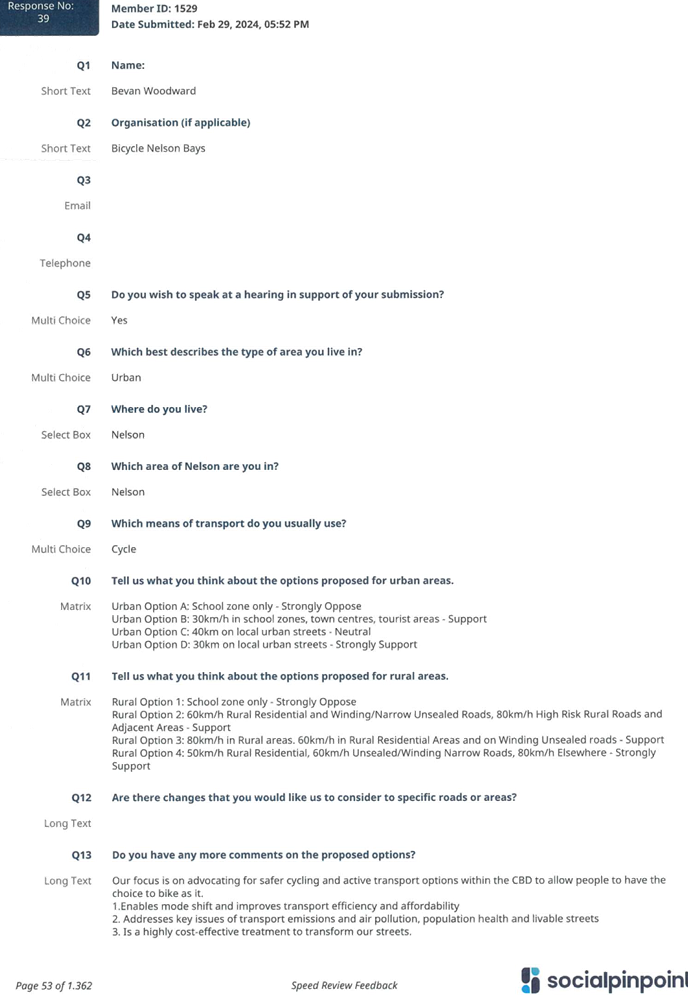
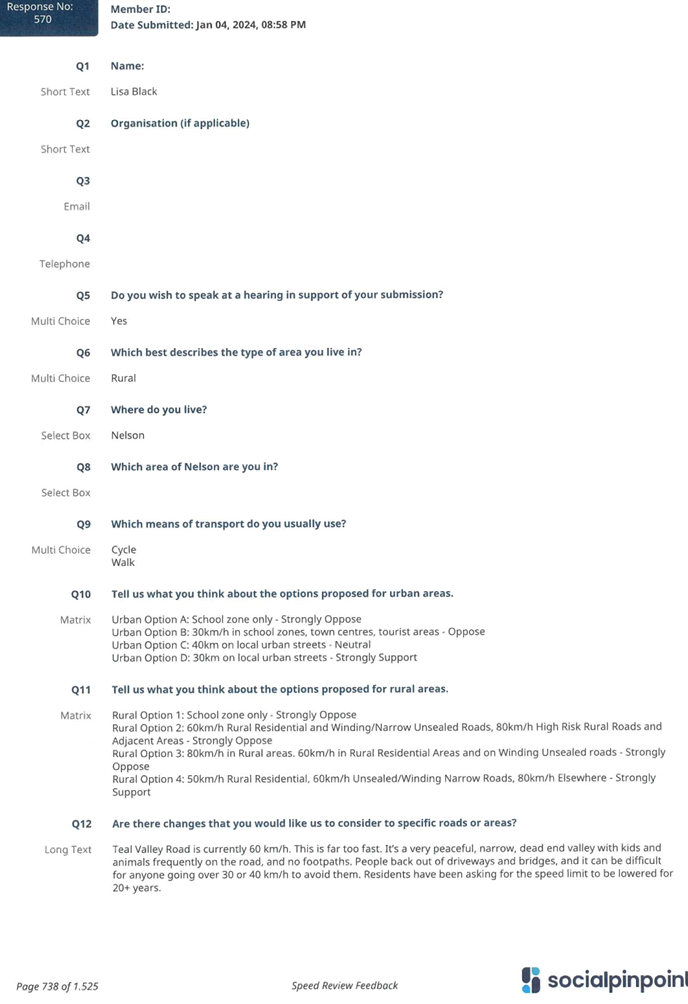
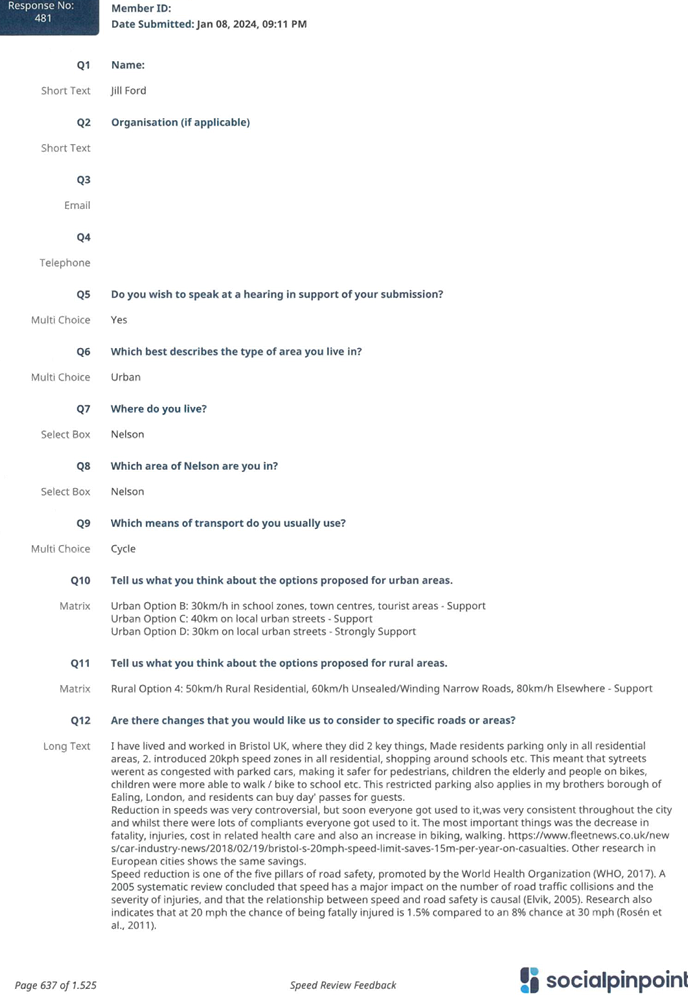
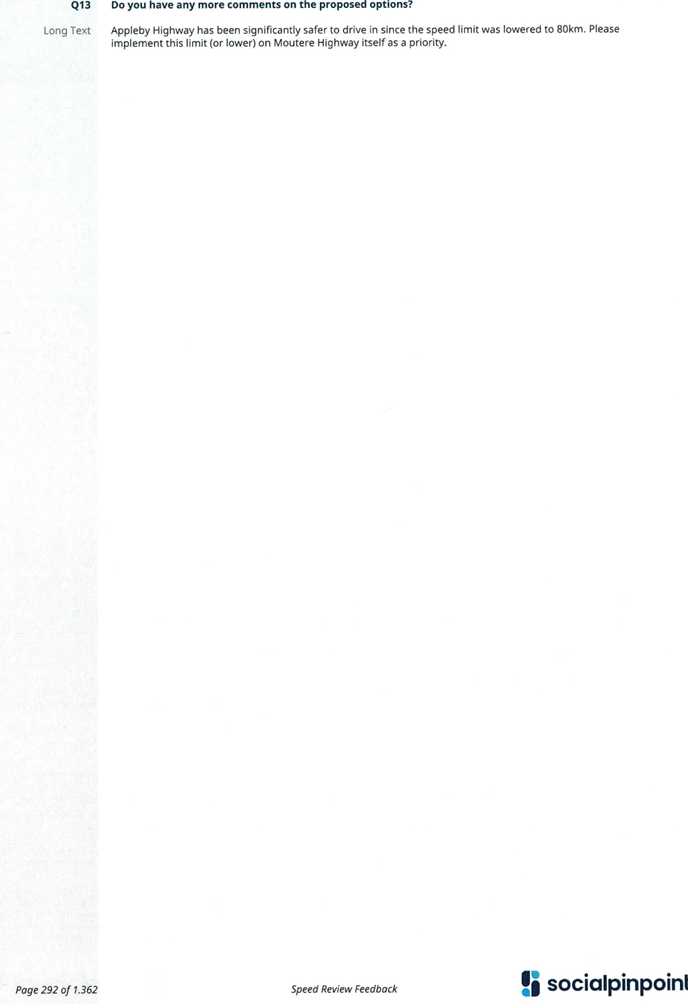
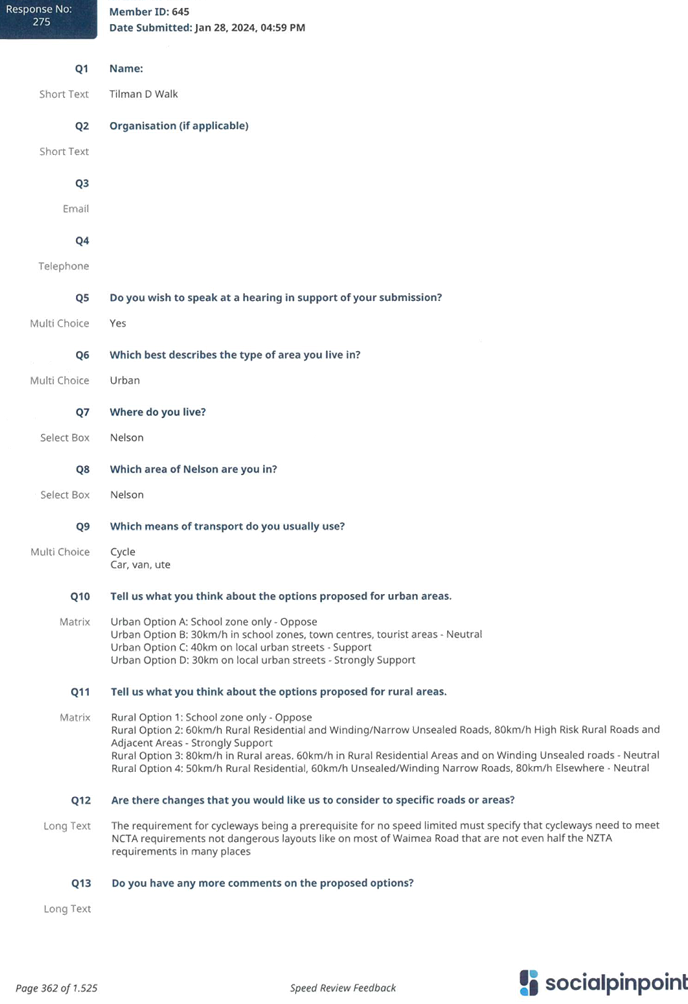
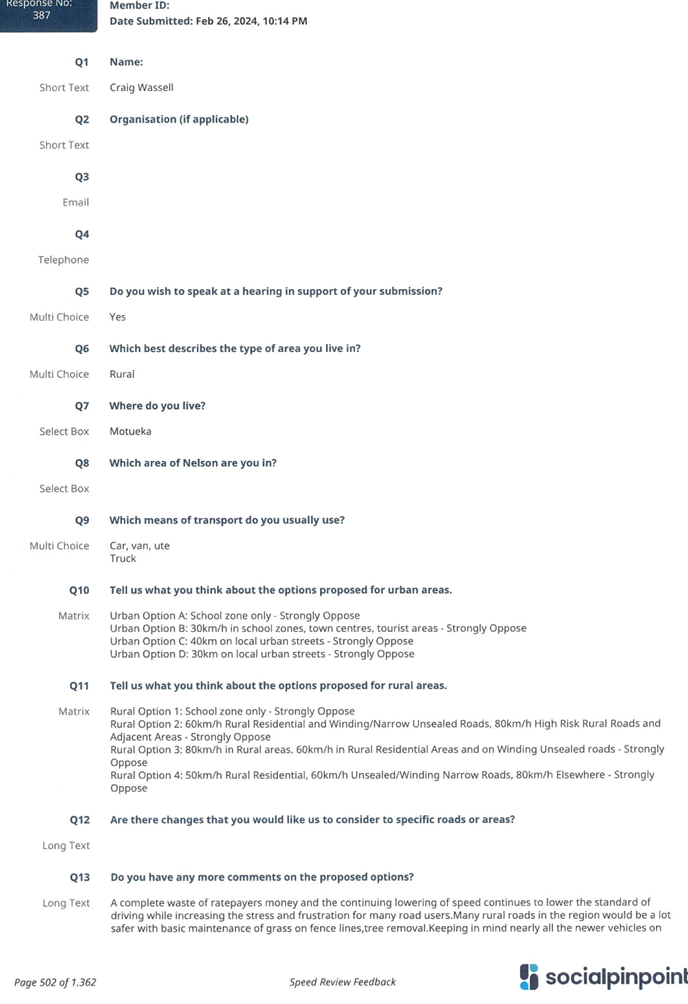
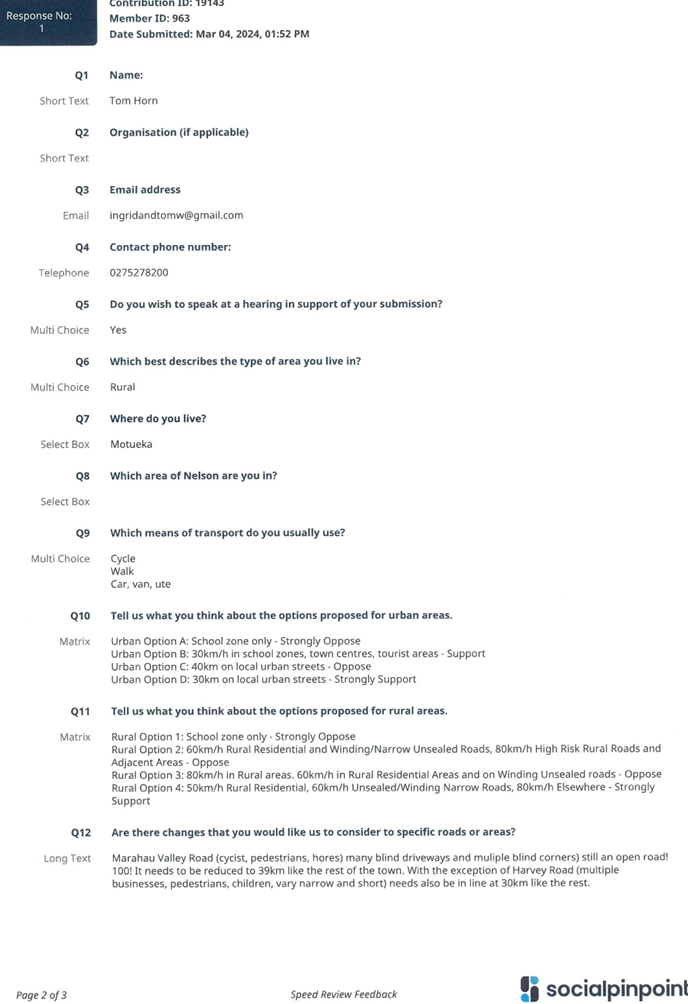
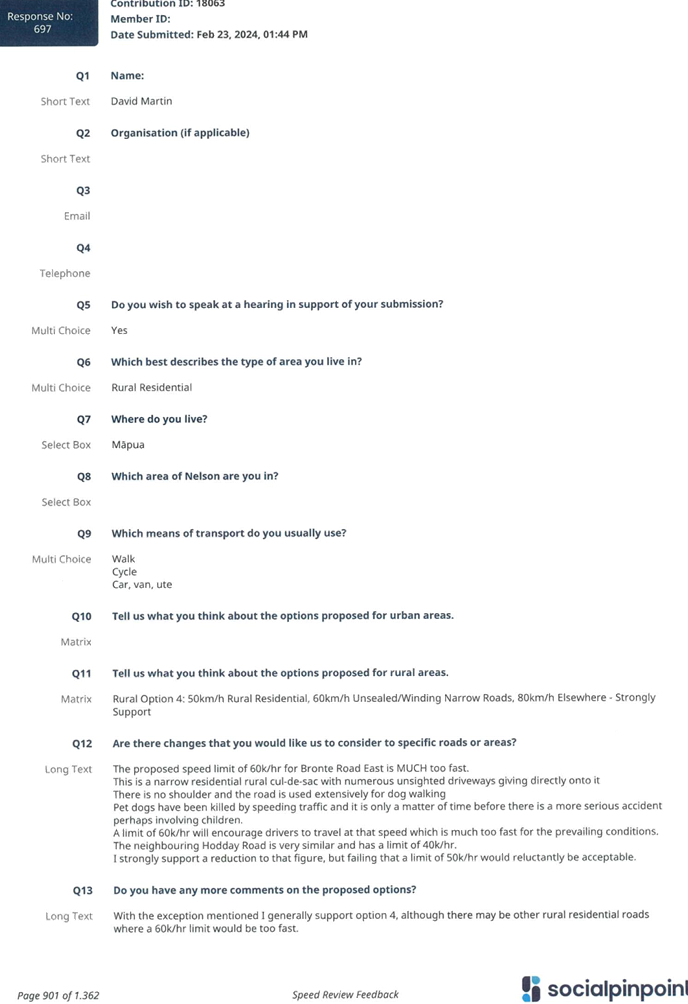
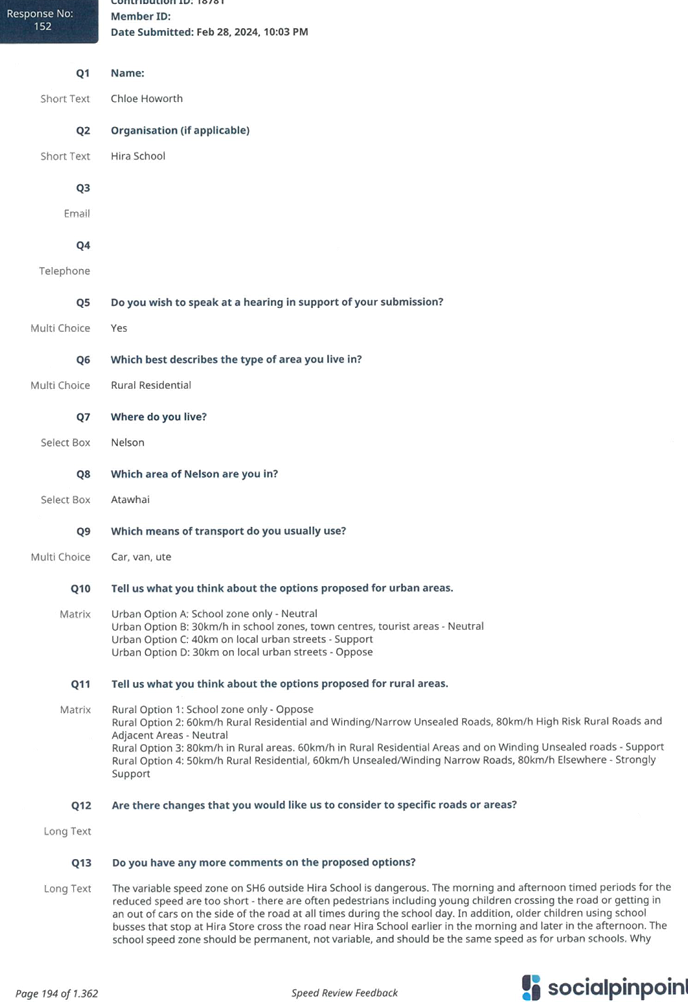
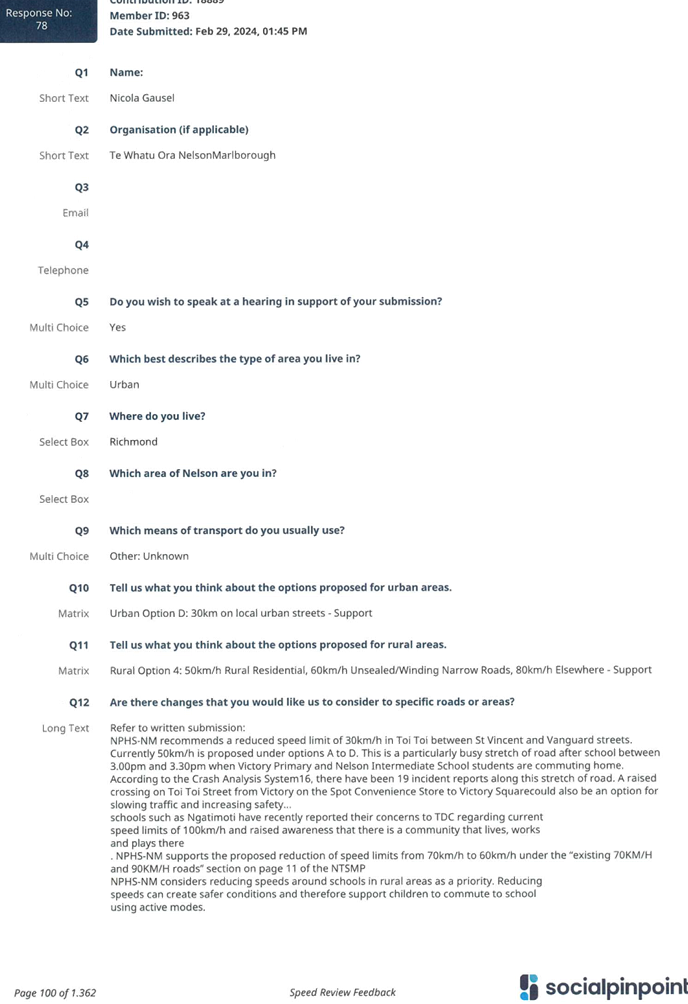
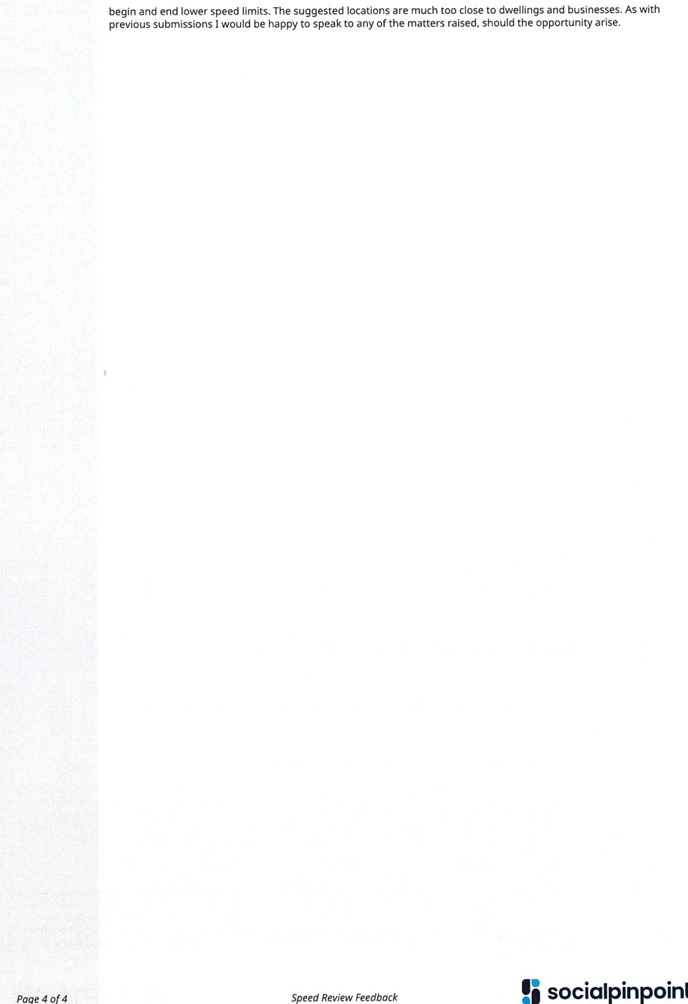
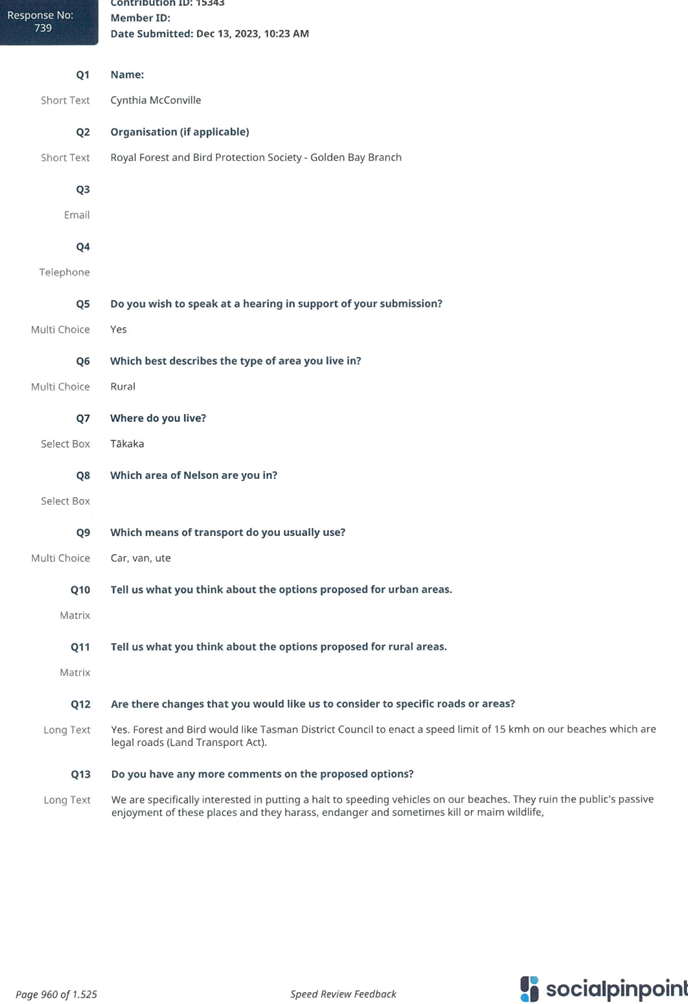
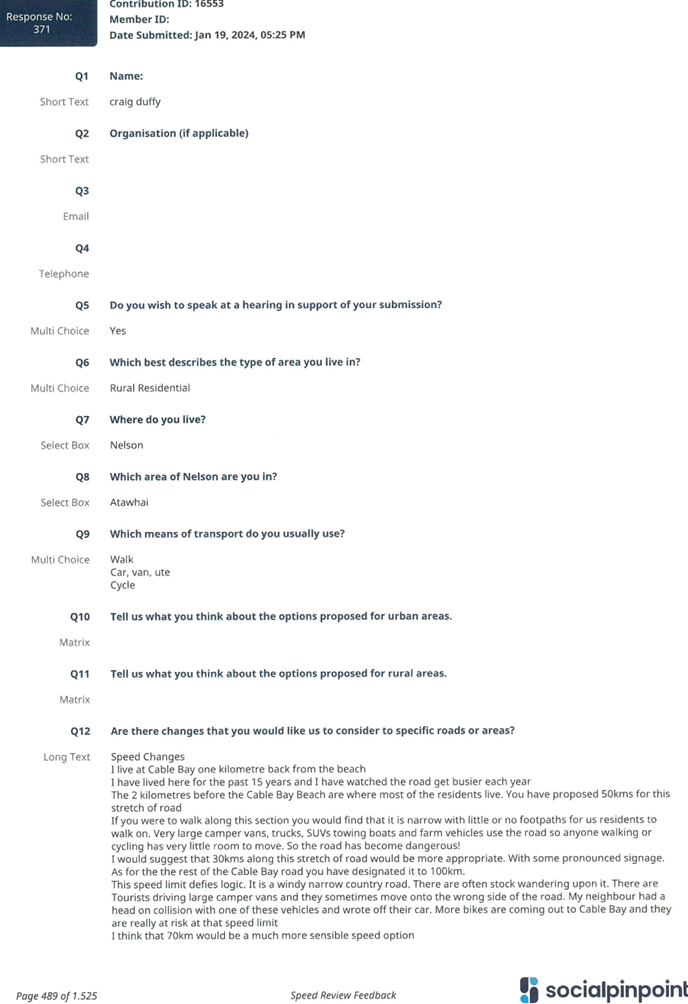
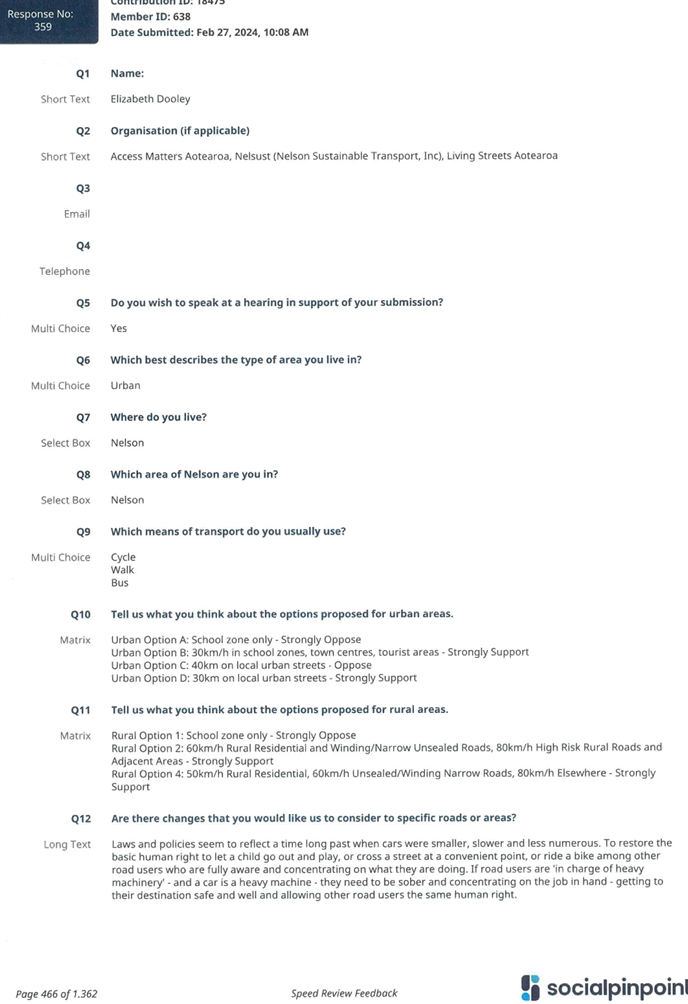
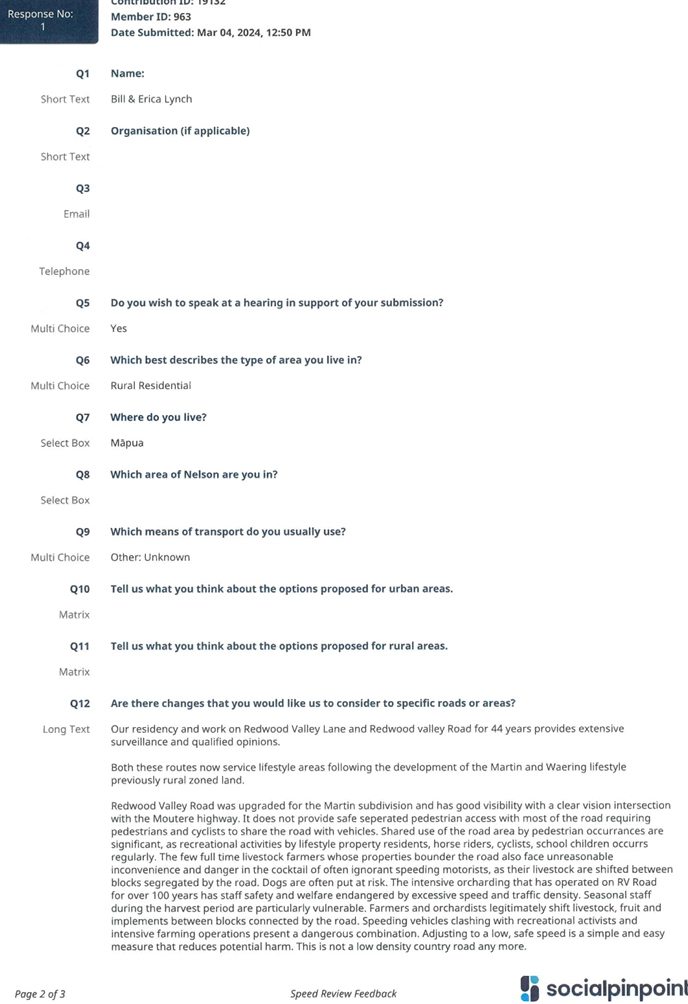
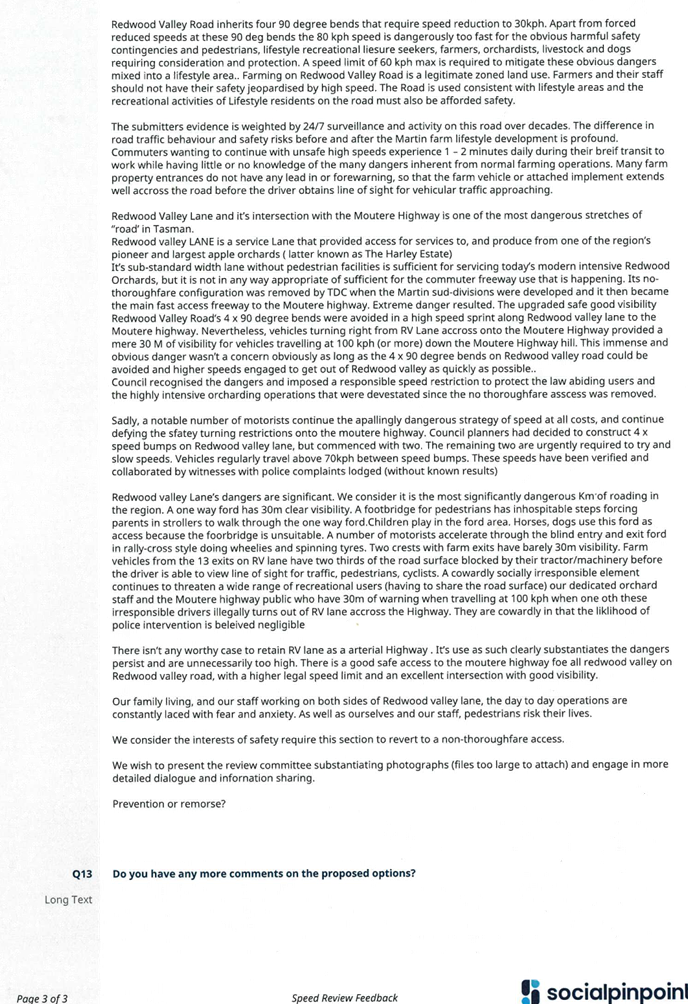
4.17 The speakers’ submissions are included in Attachment 1.
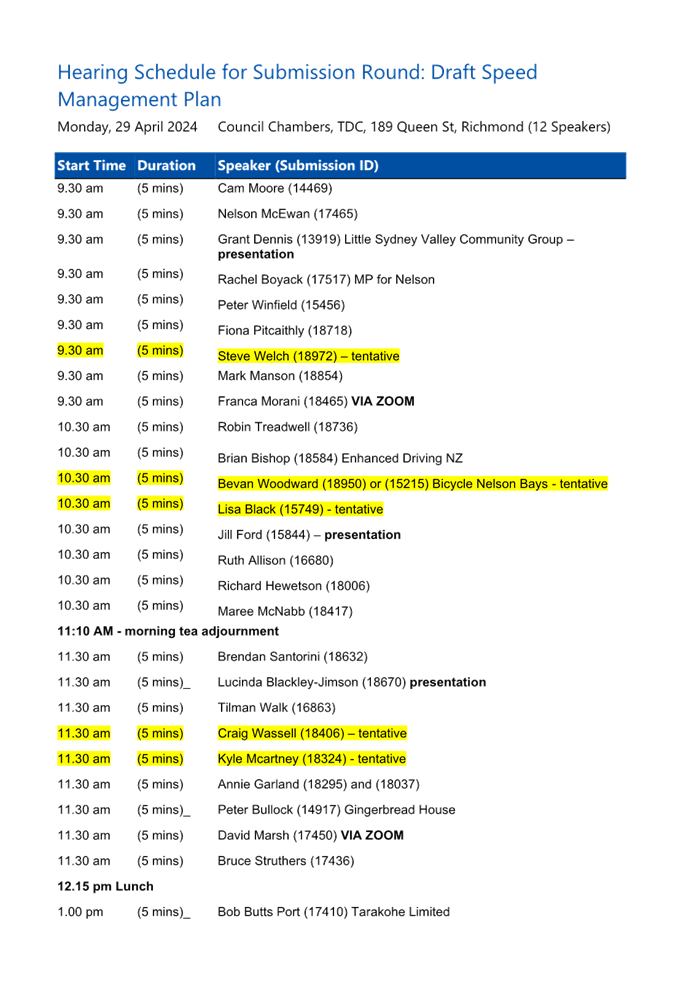
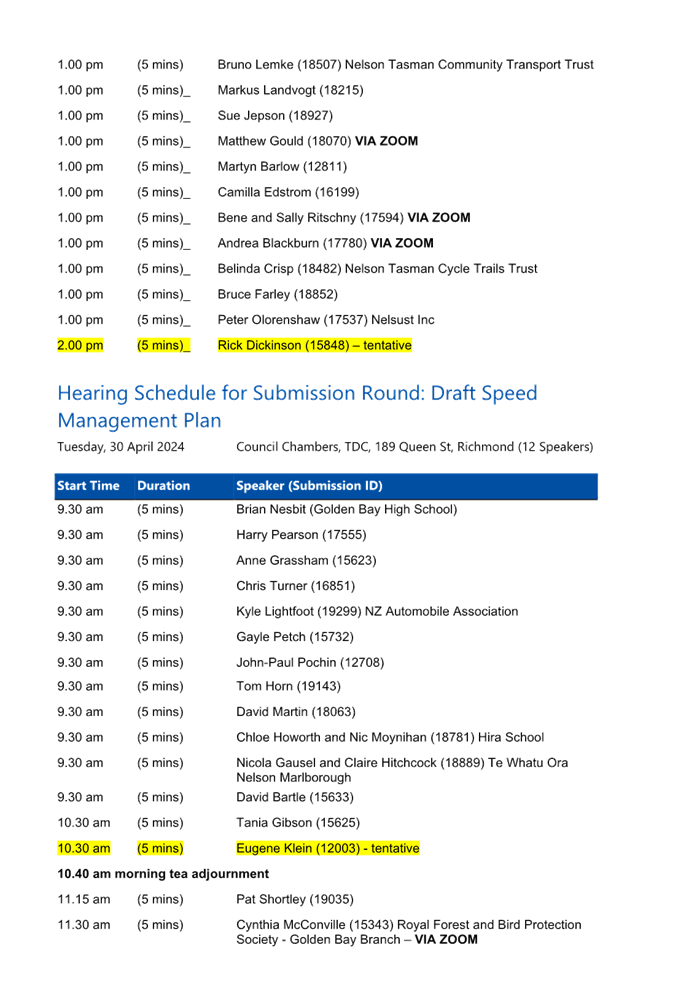
4.18 The draft hearing schedule is attached as Attachment 2. An
updated schedule will be provided at the hearing.
5. Conclusion
/ Kupu Whakatepe
5.1 There has been a good level of community interest and
feedback on the draft Speed Management Plan and this is shown by the receipt of
2,247 written submissions. The hearings provide a further opportunity for the
JNTRTC to hear and understand the feedback from some submitters.
|
1.⇩
|
Submissions
of submitters' speaking
|
11
|
|
2.⇩
|
Draft
Hearing Schedule
|
108
|